Guide
How to stock a home remedy kit — and what most kits get wrong
A thoughtful home homeopathy kit is small, organized around patterns you actually see, and honest about its limits. Here is how households build one.
2026-07-05
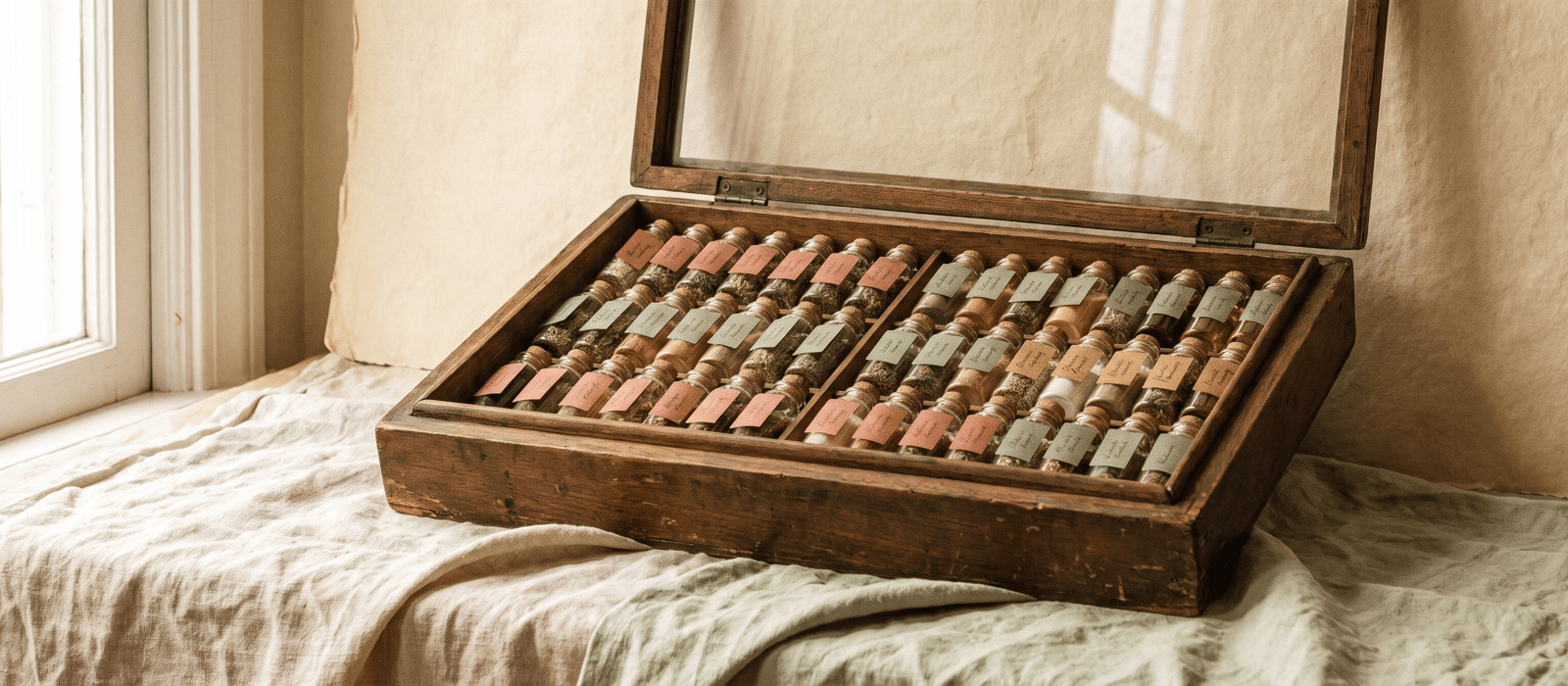
Households that use homeopathy tend to converge on the same discovery: the kit that works is smaller than the kit they bought.
The mistake: buying breadth
Large pre-assembled kits sell on count — fifty remedies, a hundred remedies, a booklet with a name for everything. In practice, most of those vials are never opened. The kit becomes a drawer of Latin names, and in an actual acute moment nobody wants to differentiate between forty options using an index card.
The useful question is not "how many remedies should a kit have?" It is: which acute patterns actually happen in this household?
Start from your household, not a list
A family with young children sees different acute pictures than a couple who travels constantly or a household of athletes. Before stocking anything, look back over the last year or two:
- What actually came up? Bumps and bruises? Sleepless stretches? Digestive complaints after rich meals? Seasonal sniffles?
- Who does it come up for? Children's patterns and red flags are their own subject — see observing a sick child.
- Where does it come up? Home, trips, sports fields?
A kit built from that history is smaller, more familiar, and far more likely to be useful. The remedies households most often keep on hand cluster around a modest set of recurring situations — injuries and bruising, stings, overindulgence, early sniffles, restless nights — not around exotic possibilities.
Organization beats inventory
The second thing most kits get wrong: no reference system beyond the booklet that came in the box. A working kit needs three layers:
- The remedies themselves, labeled clearly, stored properly (storage matters more than people expect).
- A plain-language reference card written in pattern language — what a picture looks like, what details distinguish it — not in "take X for Y" language, which teaches nothing and fails the moment a case is unusual.
- The red-flag list, first and visible. The most important card in any kit says when to stop self-care and seek medical attention. If that card is missing, the kit is not safe to rely on.
The honest limits of any kit
A kit handles the simple and self-limited. It does not handle the recurring, the layered, or the escalating — those belong in a conversation, and a well-made reference card says so on its face. A kit also never replaces medical care; nothing in one diagnoses, treats, cures, or prevents disease. A kit's job is narrower and more honest: keep the household's common patterns organized and within reach, and know exactly where its own competence ends.
If you'd rather have it assembled for you
Our home acute care kit is built exactly this way: you tell us about your household — ages, travel habits, what tends to come up — and we confirm a curated remedy list and the exact price by email before assembling anything. It ships with the reference card described above, built on the same pattern language as our acute pages, red flags first.