Guides
Educational homeopathy guides
Long-form articles for understanding homeopathy, safe self-education, and when a conversation with a qualified professional matters.
2026-07-05
Where homeopathy comes from: a short, honest history
From Hahnemann's 1790s experiments to the modern pharmacy shelf: how homeopathy began, spread, declined, and persisted — without the mythology.

2026-07-05
Acute vs. chronic: when a simple pattern stops being simple
The most consequential distinction in homeopathy is whether a situation is truly acute or the visible edge of something chronic. Here is how to tell.

2026-07-05
Using homeopathy alongside conventional care, safely
The only responsible model: homeopathy as a complement to medical care, never a substitute. What that means in practice, decision by decision.

2026-07-05
What the evidence does and does not say about homeopathy
The major reviews, what they concluded, why people practice anyway, and how to make an informed decision. The honest version, sources included.

2026-07-05
How a homeopath takes a case: the anatomy of the interview
Case-taking is the craft at the center of homeopathy. A walk through the interview's structure — and why the questions are ordered the way they are.
2026-07-05
Better from cold, worse at night: why modalities matter most
Modalities — what makes a symptom better or worse — are the most differentiating details in a case. Learn to notice and record them well.

2026-07-05
Observing a sick child: what parents notice that matters
Children act out their symptoms instead of reporting them. How caregivers turn watching into case information — and the lower red-flag bar for kids.

2026-07-05
Homeopathic potencies, explained honestly: 6C, 30C, 200C
What potency numbers actually mean, how the dilution math works, why the convention exists, and how to think about potency without mystifying it.
2026-07-05
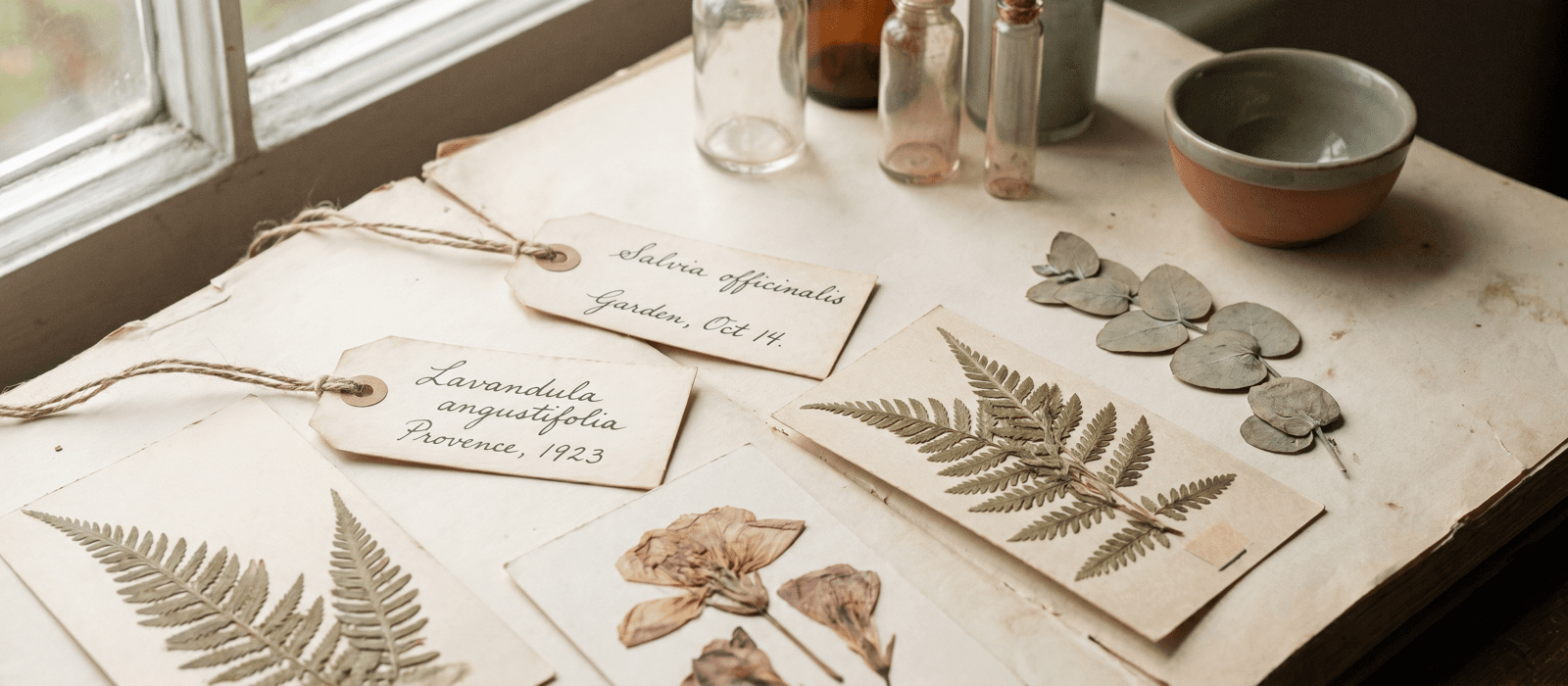
Why remedy names are in Latin, and how to read them
Arnica montana, Nux vomica, Rhus tox: the naming system behind homeopathic remedies, decoded — plus the abbreviations and the pitfalls.
2026-07-05
Red flags first: when to stop self-care and seek medical attention
The most important skill in home care is recognizing the situations that outrank every other consideration. The warning signs, in one place.

2026-07-05
Reading the seasons: how acute patterns change through the year
Households meet different acute pictures in November than in June. Using the calendar as case-taking context — and as a planning tool for the kit.
2026-07-05
Sleeplessness is a pattern, not a diagnosis
"Can't sleep" names nothing. The case-taking questions that turn a bad night into a readable picture: which hour, what kind of waking, what the mind does.
2026-07-05
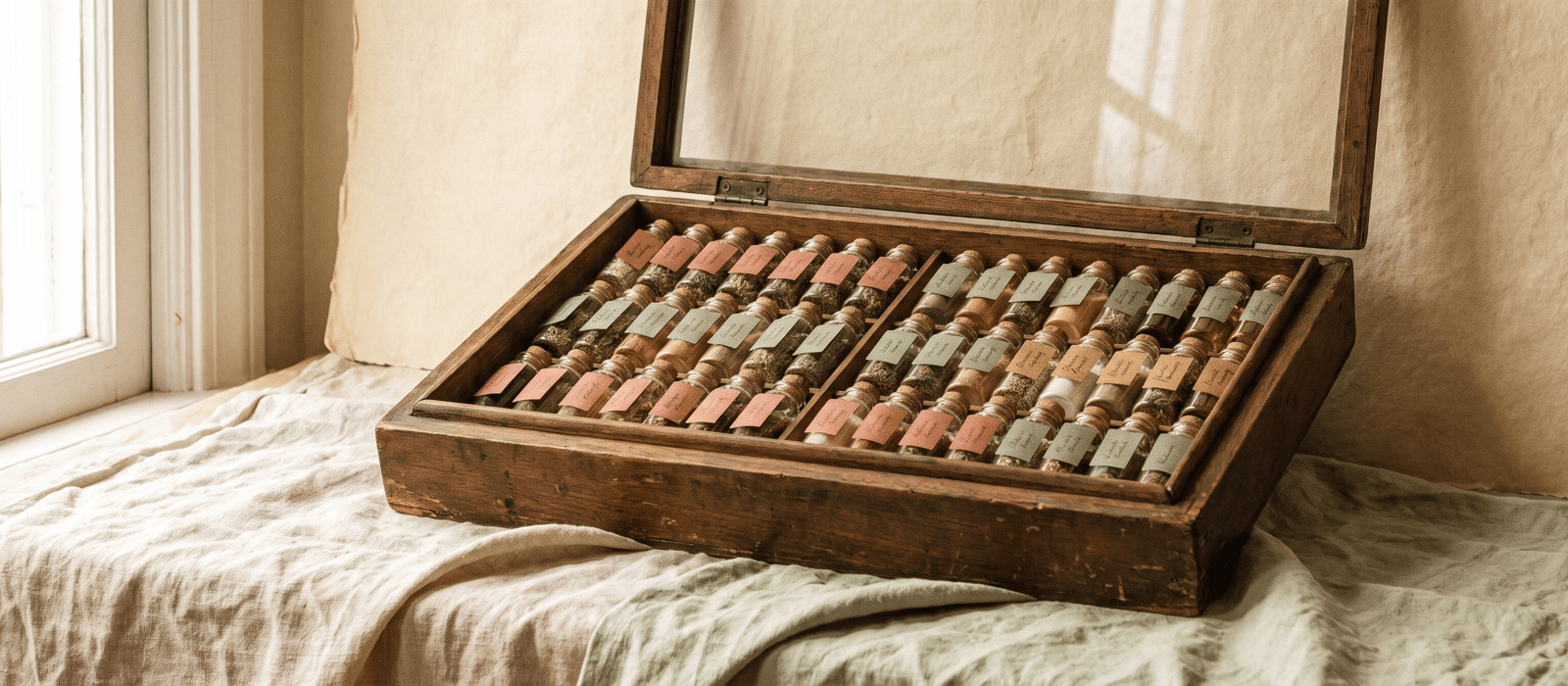
How to stock a home remedy kit — and what most kits get wrong
A thoughtful home homeopathy kit is small, organized around patterns you actually see, and honest about its limits. Here is how households build one.
2026-07-05
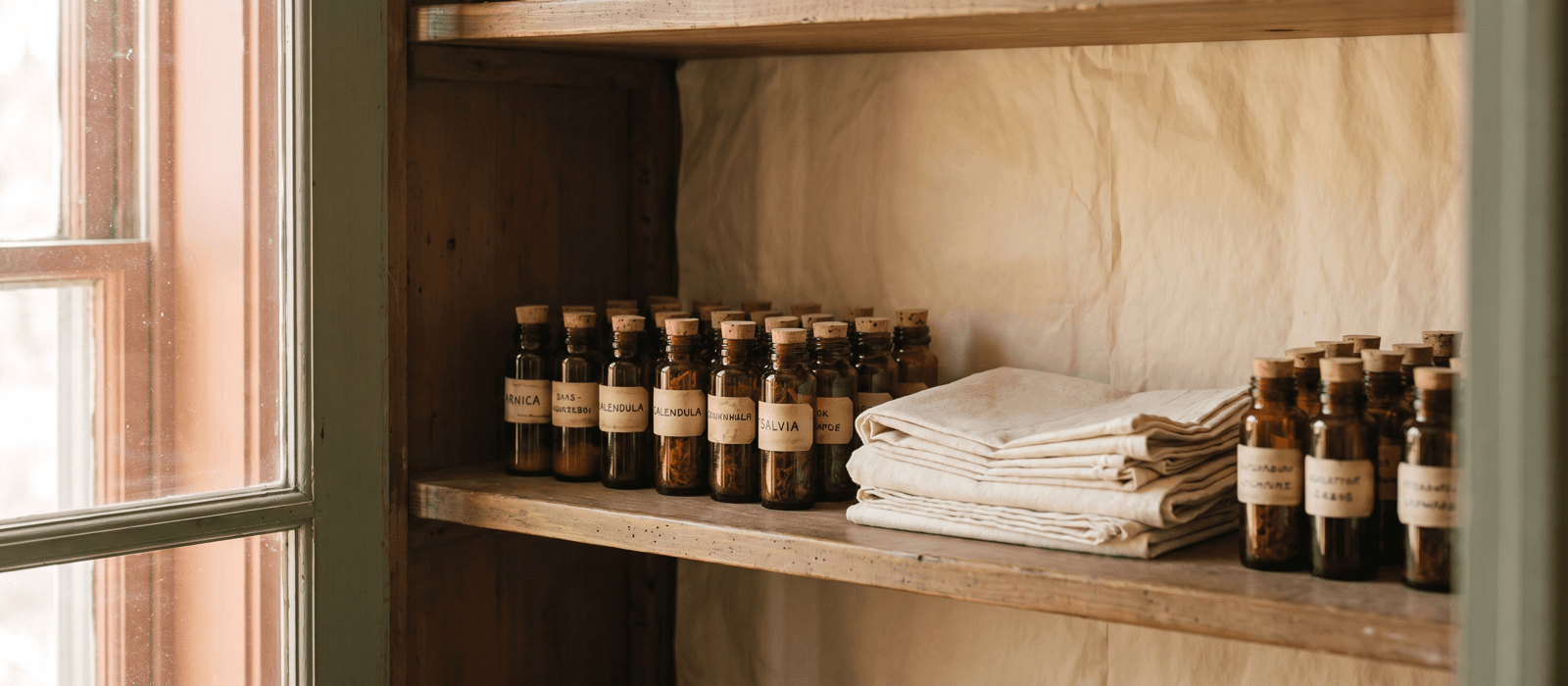
How to store and care for homeopathic remedies
Remedies are low-maintenance but not no-maintenance: heat, sun, strong odors, and sloppy handling are the traditional cautions. The practical version.
2026-07-05
The symptoms alongside the symptom: concomitants in case-taking
What else changed when the main complaint arrived? Concomitants are the case details everyone forgets to mention and case-takers most want.

2026-07-05
A traveler's approach to acute patterns
Travel compresses acute situations: new food, broken sleep, motion, altitude. How to observe and organize patterns on the road, and what to pack.

2026-07-05
How to read this site
How our educational homeopathy guides are framed — pattern language over remedy names, safety boundaries first, and a conversation when the case is layered.
2026-07-05
What is actually in a homeopathic remedy?
Source substances, dilution, succussion, pellets, and labels: a plain-language tour of how homeopathic remedies are made and what the vial contains.

2026-07-05
What to expect from an acute homeopathy consultation
What actually happens in an acute consultation: the questions asked, why they are asked, what you leave with, and what a consultation will never do.

2026-07-05
What to write down before you talk to a homeopath
The notes you take while a situation is live are worth more than any retelling. A practical checklist for capturing a case as it happens.

2026-07-05
You tried a remedy and nothing changed: how to read a follow-up
Nothing happening is information. How homeopathy traditionally reads a follow-up, the usual reasons behind no change, and when to stop retrying.

2026-04-26
What to do after AI gives you five homeopathic remedy ideas
AI remedy finders can produce useful shortlists, but the next step is organizing the case: onset, modalities, red flags, and acute vs chronic context.