Remedy profile
Agaricus muscarius in Homeopathy: Uses, Picture and Limits
What homeopathic Agaricus is made from, the burning, itching, frozen chilblain picture homeopaths describe, what changes it, potencies sold, and its limits.
By Homeopathic BenefitsPublished 7 min read
Key takeaways
- Agaricus is the classic chilblain picture. Classic texts describe red, swollen, burning and itching toes and fingers after cold, as if frostbitten.
- Ice-cold needles are its signature sensation. Homeopathic literature describes pricking, as from needles of ice, and skin that burns and feels frozen at once.
- Twitching and clumsiness complete the picture. Older texts add jerking muscles, twitching eyelids and a person who drops things and stumbles.
- It comes from the fly agaric toadstool, which is poisonous. It must never be foraged, eaten or prepared at home; potentised preparations are diluted past the point where it remains.
- Cold-injury red flags come first. Numb, white, grey or hard skin, blisters, open sores, signs of infection, or chilblains in someone with diabetes or poor circulation are medical questions before homeopathic ones.
The short answer
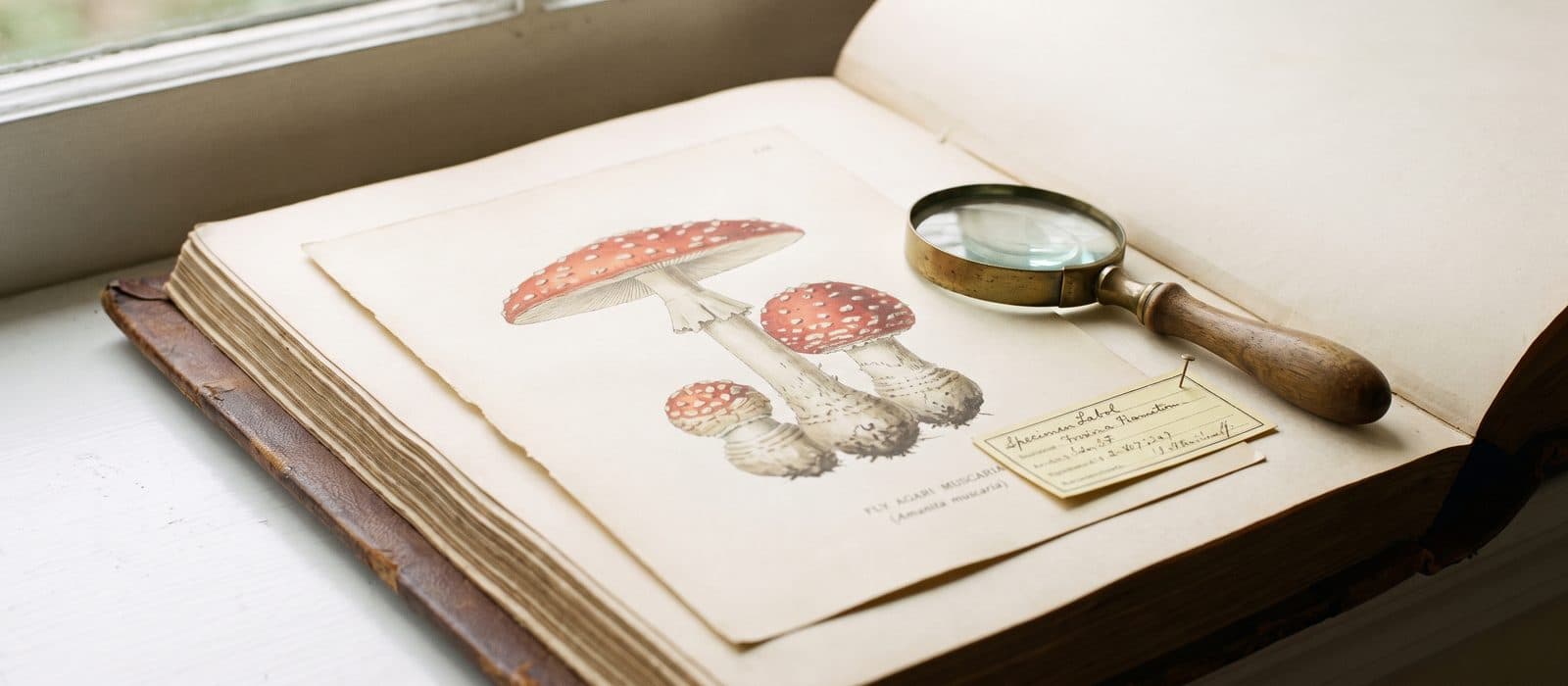
Agaricus muscarius is a homeopathic remedy prepared from the fly agaric, Amanita muscaria, the red, white-spotted toadstool of birch and pine woods. The mushroom is poisonous and must never be picked or eaten. In homeopathy it names a traditional picture rather than a treatment: chilblains that burn, itch and swell after cold exposure, with a sensation of frostbite or ice-cold needles pricking the skin, alongside twitching muscles and a clumsy, awkward quality to movement. It was proved in the nineteenth century, and its provings and poisonings fill long entries in Allen's Encyclopedia and Clarke's Dictionary; Boericke (1927) gave the chilblain picture a prominent place. It is not a general cold-weather remedy, and nothing about the picture replaces medical care for frostbite.
| Latin name | Agaricus muscarius |
|---|---|
| Abbreviation | Agar. |
| Common name | Fly agaric, toadstool |
| Source | The fresh fly agaric mushroom, Amanita muscaria (formerly Agaricus muscarius) (plant kingdom) |
| Commonly sold potencies | 6C, 30C |
| First proving | Proved in the nineteenth century; the provings and poisonings are recorded in Allen's Encyclopedia (1874–1879) and Clarke's Dictionary (1900–1902) |
What is Agaricus muscarius made from?
Homeopathic Agaricus is prepared from the fresh fly agaric, Amanita muscaria, the toadstool of fairy tales: a bright red or orange cap scattered with white warty flecks, on a white stem with a ring and a bulbous base. It grows in late summer and autumn under birch, pine and spruce across the northern hemisphere. Older botany placed it in the genus Agaricus, which is why the remedy keeps the old name while the mushroom is now classified as an Amanita.
Be clear about the mushroom itself. The fly agaric is poisonous. It contains ibotenic acid and muscimol, which act on the brain and cause confusion, agitation, delirium, hallucinations, drowsiness and, in severe cases, seizures and coma. It is never something to forage, eat, dry or prepare at home, whatever is said about it online. It also belongs to the same genus as the death cap and the destroying angels, which kill, and mistakes between wild mushrooms are how most fatal poisonings happen. If anyone has eaten a wild mushroom and feels unwell, that is an emergency.
The homeopathic preparation makes a tincture of the fresh mushroom and carries it through repeated dilution and succussion to the labelled potency. At the common potencies the arithmetic says no molecule of the mushroom remains. Our potencies guide explains that honestly, along with why it is also the reason science is sceptical, and our guide to reading Latin remedy names explains why a poisonous source appears on a label at all.
The poisoning picture echoes the homeopathic one: twitching, jerking and trembling muscles, clumsiness, an excited and talkative state followed by dullness. That overlap is the idea behind a proving.
What is the Agaricus muscarius picture?
The Agaricus picture begins with cold. Imagine someone who walked home through a frosty evening in thin shoes and now, by the fire, has toes that are swollen, red to purplish, burning and itching all at once. The itch is maddening, the burning is worse for the warmth they came in for, and the skin feels as though it were frozen, or as if needles of ice were pricking it. Scratching makes the itching worse. Classic texts describe exactly this: the chilblain picture of the old materia medica, with the toes, fingers, ears and nose most often involved.
Boericke (1927) describes Agaricus as acting on the nervous system as much as the skin. The person twitches: eyelids flicker, single muscles jerk, the limbs tremble. They are awkward and clumsy, dropping things and stumbling, and older texts note that the symptoms can appear diagonally, one arm on one side and the opposite leg on the other. Mentally, the provings describe either an excited, talkative, almost tipsy state or a dull, slow one, sometimes one after the other.
The cold sensitivity runs through everything. The person is chilly and sensitive to cold air, and the whole picture is worse in frosty weather, which is why homeopaths filed it as a winter remedy long before anyone used the word chilblain on a remedy label.
What makes it better or worse?
The traditional modalities centre on cold, frost and nervous strain. Agaricus is worse from cold air and freezing weather, and better from slow, gentle movement.
| Modality | Worse | Better |
|---|---|---|
| Temperature | Cold air, frost, freezing weather | Gradual, gentle warming |
| Skin | Scratching; sudden heat after cold | Being left alone |
| Motion | Fast or sudden movement | Slow, gentle movement (Boericke) |
| Mind | Mental exertion | Rest |
| Weather | Before a thunderstorm | Mild, settled weather |
The modalities are what separate one cold-weather skin picture from another; our guide to modalities, better and worse explains why a homeopath reads them before any remedy name.
What is Agaricus muscarius traditionally discussed for?
In homeopathic literature, Agaricus is traditionally discussed as the signature chilblain picture, and for twitching and jerking. On this site it appears on one acute page, where the pattern sits beside its neighbours and the red flags come first.
Skin and cold exposure
- Painful, itchy toes after cold exposure: the burning-itching chilblain pattern, with red swellings and odd needle-like or frostbite sensations in the toes. Our guide to seasonal acute patterns puts it in its winter context.
Nerves and muscles (classic texts)
- Older materia medica describes twitching eyelids and muscles, trembling, jerking limbs and clumsiness. There is no acute page for these here, and new or spreading twitching, weakness, or any seizure is a medical question first.
What is Agaricus muscarius not?
Agaricus is not a frostbite remedy, and it is not a way to warm someone who is cold. Chilblains are a mild, itchy inflammatory reaction to cold; frostbite is tissue injury. Skin that is white, grey, waxy, hard or numb after cold exposure, blisters, blackened skin, open sores, spreading redness or pus, or chilblains that keep returning or have not settled in two to three weeks all need medical assessment. So do chilblains in someone with diabetes or poor circulation, and colour changes in the fingers that come and go with cold, which can belong to other conditions. Our red flags first guide explains why those questions come first.
It is also, above all, not the mushroom. Nothing on this page suggests that any part of the fly agaric is safe to handle as food or medicine.
Homeopaths separate it from its neighbours like this:
| Picture | Where it sits | Defining feature | Key modality |
|---|---|---|---|
| Agaricus muscarius | Chilblains after cold | Burning, itching, red swelling; as if frozen; ice-cold needles; twitching | Worse cold air and frost |
| Petroleum | Winter-cracked skin | Deep, bleeding cracks on hands and heels; rough, dry skin | Worse in winter; better in summer |
| Pulsatilla | Chilblains that itch in warmth | Bluish, swollen; itch worse from heat; mild, changeable mood | Worse warm rooms; better cool open air |
| Cuprum metallicum | Cramping and jerking | Violent cramps that start in fingers and toes | Better from cold drinks |
What potencies is Agaricus muscarius sold in?
Agaricus is sold most often as 6C and 30C pellets, usually through homeopathic pharmacies. Potency describes the preparation process, not an amount of mushroom: 30C means thirty successive 1:100 dilutions with succussion between them. Our potencies guide explains the scale and what remains in the vial.
This page deliberately gives no frequency or instructions for taking Agaricus. That depends on a whole case, not a remedy name. Read the product label, and talk to a qualified practitioner about an individual situation.
What remedy lists don't tell you
Two things the "remedies for chilblains" lists leave out:
- The sensation decides it, not the cold. Every chilblain follows cold. What the old texts recorded for Agaricus is the strange part: the feeling of frozen skin and ice-cold needles, burning and itching together. Someone whose chilblains simply ache, or itch only in a warm room, sits in a different picture.
- The twitching eyelid is part of the case. Classic texts link the skin to the nerves: the same person may mention, almost in passing, that an eyelid has been flickering or that they keep dropping things. A list sorted by "chilblains" would never ask, and a homeopath would.
Where the Agaricus muscarius picture appears on this site
Acute pages that discuss this picture among their educational patterns, with the pattern name each page uses.
- What homeopathic remedy for painful, itchy toes after cold exposure?Agaricus-like burning-itching chilblain pattern
Not sure whether a picture fits?
A remedy profile describes a picture; it cannot tell you whether that picture matches what you are seeing. An acute consultation starts from the case itself: onset, sensations, what changes it, and the red flags.
Acute consultation · $45Frequently asked questions
- What is Agaricus muscarius?
- Agaricus muscarius is a homeopathic remedy prepared from the fly agaric, Amanita muscaria, the red-capped, white-spotted toadstool of northern woodland. The mushroom itself is poisonous and must never be picked or eaten. In homeopathy it names a traditional picture: burning, itching skin that feels frozen, as from ice-cold needles, after cold exposure, together with twitching and clumsiness. It is a description homeopaths use to compare cases, not a finding that it works for any condition.
- What is Agaricus used for in homeopathy?
- Homeopathic literature traditionally discusses Agaricus as its signature chilblain picture: red, swollen, burning and itching toes or fingers after cold, with a sensation of frostbite or of ice-cold needles. Classic texts also describe twitching, jerking muscles and awkwardness. Skin that is white, grey, hard or numb after cold, chilblains that blister or ulcerate, or new, unexplained twitching need medical care first.
- What is Agaricus 30C used for?
- 30C is a commonly sold potency of Agaricus, along with 6C, mostly through homeopathic pharmacies. In the tradition the potency does not change the picture; 30C is discussed for the same burning, itching, frozen-feeling chilblain state as any other potency. Our potencies guide explains what 30C means as a dilution.
- How is Agaricus taken?
- This page does not give instructions on how or how often to take any remedy, because that depends on a whole case rather than on a remedy name. The product label carries the manufacturer's directions, and a qualified practitioner can advise on an individual situation. Cold injury with numb, pale or hard skin belongs with a clinician first.
- Where can I buy Agaricus?
- Homeopathic pharmacies and manufacturers sell Agaricus muscarius as single-remedy pellets, most often in 6C and 30C. This site also prepares custom single remedies to order: you name the remedy and potency, and the details are confirmed by email before anything is made. The order form does not give advice on which remedy to choose. The mushroom itself is never something to buy, forage or prepare.
- What is Agaricus made from?
- Homeopathic Agaricus is prepared from the fresh fly agaric mushroom, Amanita muscaria, made into a tincture and then diluted and succussed step by step to the labelled potency. The raw mushroom contains ibotenic acid and muscimol and causes serious poisoning; it grows alongside deadly relatives. Potentised preparations are diluted far past the point where any of the mushroom remains.
This guide is educational only and is not medical advice or a personalized remedy recommendation. Acute symptoms can become urgent; when in doubt, seek professional evaluation.