Remedy profile
Phosphorus in Homeopathy: Uses, Picture and Limits
What homeopathic Phosphorus is made from, the open, sensitive, easily bleeding picture homeopaths describe, what changes it, potencies sold, and its limits.
By Homeopathic BenefitsPublished 7 min read
Key takeaways
- Phosphorus is the picture of the open, sensitive, sympathetic person. Classic texts describe someone warm, expressive and impressionable, who wants company and brightens quickly with reassurance.
- Bright-red bleeding and easy bruising are its physical keynotes. Small wounds bleed freely, nosebleeds come readily, and bruises appear from little.
- Thirst for cold drinks runs through it. The person wants ice-cold water and cold food, and in the old texts may bring a drink back up once it has warmed in the stomach.
- It is made from a dangerous element. White phosphorus is highly toxic and burns in air; potentised preparations are diluted far past the point where it remains.
- Bleeding and hoarseness have red flags first. A nosebleed that will not stop or follows a head injury, unexplained bruising, or hoarseness lasting more than three weeks are medical questions before they are homeopathic ones.
The short answer
Phosphorus is a homeopathic remedy prepared from the element phosphorus, classically its white form, a waxy, highly toxic substance that glows in the dark and catches fire in air. In homeopathy it names a traditional picture rather than a treatment: an open, warm, sympathetic and easily impressed person who fears being alone, the dark and thunderstorms, and who brightens quickly with company. Physically, classic materia medica describes bright-red bleeding from small causes, easy bruising, hoarseness and chesty colds, burning sensations, and a strong thirst for cold drinks. Hahnemann published it in The Chronic Diseases (1828–1830), and Kent's Lectures (1905) gave it one of their most vivid portraits. It is not a nosebleed or laryngitis remedy, and nothing about the picture replaces medical assessment of bleeding, bruising or a voice that does not recover.
| Latin name | Phosphorus |
|---|---|
| Abbreviation | Phos. |
| Common name | Phosphorus (the element) |
| Source | Elemental phosphorus, classically the white (yellow) form, potentised (mineral kingdom) |
| Commonly sold potencies | 6C, 30C, 200C |
| First proving | Hahnemann, The Chronic Diseases (1828–1830) |
What is Phosphorus made from?
Homeopathic Phosphorus is prepared from the chemical element phosphorus. The classic starting material is white phosphorus (also called yellow phosphorus), the waxy form discovered in 1669 by the Hamburg alchemist Hennig Brand, who distilled it from urine. Its name means "light-bearer": it glows faintly in air as it slowly oxidises, and it bursts into flame at little above room temperature, which is why it is stored under water.
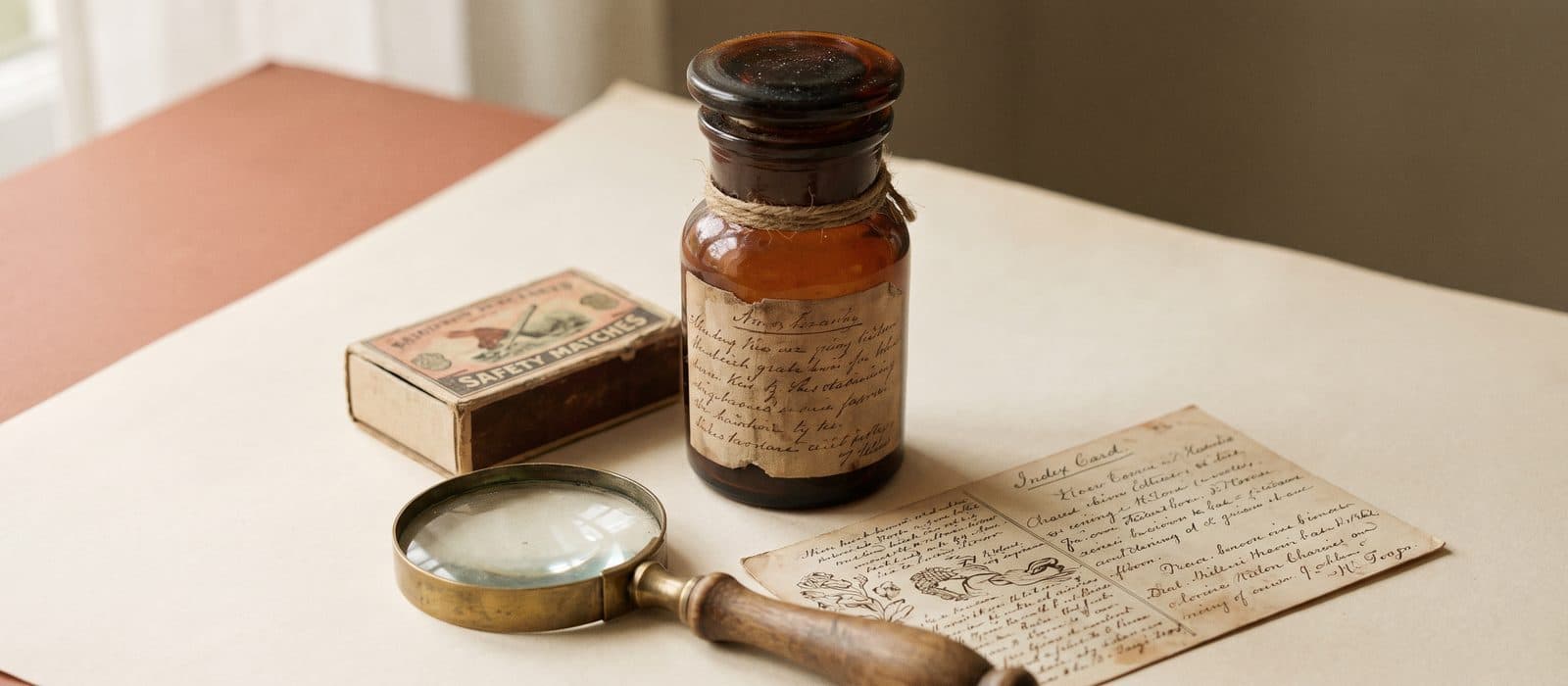
The source deserves to be stated plainly. White phosphorus is one of the most dangerous substances a remedy label names. It is acutely poisonous when swallowed, damaging the liver, kidneys and heart, and it causes deep chemical burns. In the nineteenth century it was the active ingredient of strike-anywhere matches, and the women and girls who made them developed "phossy jaw", a destruction of the jawbone from years of exposure to the fumes; its use in matches was banned by international agreement in 1906. It is never something to handle, keep or prepare at home.
The homeopathic preparation carries the element through trituration or solution and then through repeated dilution and succussion to the potency on the label. At the common potencies the arithmetic says none of it is expected to remain; our potencies guide explains what that means, and why it is also the reason mainstream science is sceptical. Our guide to reading Latin remedy names explains why toxic sources appear on labels at all. Phosphorus also appears in other remedy names, such as Ferrum phosphoricum and Kali phosphoricum, where it is part of a salt; those are different remedies.
What is the Phosphorus picture?
The Phosphorus picture is a person who is open to everything, for better and worse. Picture a lively, affectionate teenager with a cold that has gone to the throat. Their voice has gone husky by evening and it hurts to talk, but they keep talking, because they want the company. They ask for a glass of iced water, then another. When someone sits on the edge of the bed they visibly brighten. Alone in the dark they are uneasy; a thunderstorm frightens them. Earlier that week they had a nosebleed that came from nothing, bright red and free-flowing.
Classic texts describe this temperament with unusual warmth. Kent's Lectures (1905) portray someone sympathetic and easily moved, quick to take on other people's feelings, enthusiastic and then easily exhausted, anxious in the evening and at twilight, and fearful of being alone, of the dark, of thunder and of illness. They are often described as tall and slender, quick and expressive. The reassurance matters: a Phosphorus-like person can be anxious and frightened, yet quickly comforted, which homeopaths contrast with the fear that will not be soothed in other pictures.
Physically, Boericke (1927) describes Phosphorus as irritating and inflaming the mucous membranes, and lists small wounds that bleed much, bright-red haemorrhages and easy bruising. The larynx is a classic site: hoarseness worse in the evening, a raw, painful throat that makes speaking difficult, and a tight, oppressed chest with a dry, tickling cough. Burning sensations appear in many places, in the stomach, between the shoulder blades, in the palms. And the thirst is for cold: ice-cold drinks, ice cream, cold food, all welcome.
What makes it better or worse?
The traditional modalities centre on company, cold food and the side the person lies on. Phosphorus is worse at twilight, alone and lying on the left side, and better from company, sleep and cold drinks.
| Modality | Worse | Better |
|---|---|---|
| Company | Being alone, the dark | Company, sympathy, being rubbed or reassured |
| Time | Evening and twilight | After even a short sleep |
| Position | Lying on the left side or on the painful side | Lying on the right side |
| Food and drink | Warm food and drink | Cold drinks, cold food, ice |
| Weather and senses | Thunderstorms; changes of weather; strong smells, light and noise | Open air (for some complaints) |
Our guide to the symptoms alongside the symptom explains why a homeopath asks about thirst, company and fears before naming any picture.
What is Phosphorus traditionally discussed for?
In homeopathic literature, Phosphorus is traditionally discussed for sensitive, thirsty states with a tendency to bleed and to go hoarse. Each of these appears on one of our acute pages, where the Phosphorus-like pattern sits beside its neighbours and the red flags come first.
Bleeding
- Bright-red bleeding in someone who bleeds and bruises easily: a sudden nosebleed. That page sets out when a nosebleed needs urgent care.
Voice and throat
- Husky hoarseness with thirst after overusing the voice: hoarseness after yelling.
- The raspy voice and chesty tendency of a cold that has moved down: a raspy voice with a cold. Our guide to a child's first cold covers when a cold becomes urgent.
What is Phosphorus not?
Phosphorus is not "the nosebleed remedy", and the picture is not a reason to explain away bleeding or bruising. The commonest misreading is to read the tendency to bleed as a personality trait. Bleeding easily, bruising without cause, or nosebleeds that keep coming back can reflect a clotting disorder, a blood condition, a medicine or a problem in the nose, and they deserve a doctor and often a blood test. A nosebleed that lasts more than 10 to 15 minutes despite firm pressure, is heavy, follows a blow to the head, makes it hard to breathe, or happens in someone taking blood thinners needs urgent care. Hoarseness that lasts more than three weeks, especially in a smoker, needs to be examined, as do noisy breathing, difficulty swallowing and coughing up blood. Our guide to red flags first sets these out.
Homeopaths separate Phosphorus from its neighbours like this:
| Picture | Where it sits | Defining feature | Key modality |
|---|---|---|---|
| Phosphorus | Bleeding, hoarseness, chesty colds | Open, sensitive, wants company; craves cold drinks | Worse lying on the left side; better company and sleep |
| Arsenicum album | Anxious, wants company | Restless fear with weakness; sips of warm drinks | Worse after midnight; better warmth |
| Causticum | Hoarseness and lost voice | Raw throat, hoarseness worse in the morning; sympathetic | Worse dry cold wind; better damp weather |
| Ferrum phosphoricum | Early colds, nosebleeds | Flushed, bright-red bleeding without a strong temperament | Worse motion and at night |
| Hamamelis | Venous bleeding and bruising | Dark, slow, oozing blood; bruised soreness | Worse warm, moist air |
Phosphorus and Causticum are the two classic hoarseness pictures. The traditional distinction is timing: Phosphorus is hoarse and raw in the evening; Causticum is worst in the morning.
What potencies is Phosphorus sold in?
Homeopathic Phosphorus is sold most often as 30C pellets, the common shelf potency for single remedies, with 6C and 200C also widely available. Potency describes the preparation process, not an amount of phosphorus: 30C means thirty successive 1:100 dilutions with succussion between them. Our potencies guide explains the scale and what remains in the vial, and why low-potency products of toxic sources carry their own labelling.
This page deliberately gives no frequency or instructions for taking Phosphorus. That depends on a whole case, not a remedy name. Read the product label, and talk to a qualified practitioner about an individual situation.
What remedy lists don't tell you
Two things the short lists leave out:
- The temperament is drawn more fully than almost any other. Classic authors wrote about Phosphorus as a person, open, impressionable, affectionate and easily frightened, and much of what they found characteristic is in that portrait rather than in the nose or the throat. A hoarse voice in someone withdrawn, chilly and wanting to be left alone does not fit it, however hoarse.
- The shared element does not make the remedies similar. Phosphorus, Ferrum phosphoricum, Kali phosphoricum and Phosphoricum acidum all contain the word, and lists sometimes group them as a family. In the materia medica they are separate pictures with separate provings: the exhausted, apathetic Phosphoricum acidum person looks nothing like the bright, sociable Phosphorus one. Reading the whole name, and the whole description, is the point.
Where the Phosphorus picture appears on this site
Acute pages that discuss this picture among their educational patterns, with the pattern name each page uses.
- What homeopathic remedy for a raspy voice with a cold?Phosphorus-like hoarse, thirsty pattern
- What homeopathic remedy for a sudden nosebleed?Phosphorus-like bright bleeding, sensitive pattern
- What homeopathic remedy for hoarseness after yelling?Phosphorus-like hoarse, thirsty pattern
Not sure whether a picture fits?
A remedy profile describes a picture; it cannot tell you whether that picture matches what you are seeing. An acute consultation starts from the case itself: onset, sensations, what changes it, and the red flags.
Acute consultation · $45Frequently asked questions
- What is Phosphorus?
- Phosphorus is a homeopathic remedy prepared from the element phosphorus, classically its white form, which is highly toxic and catches fire in air. In homeopathy it names a traditional picture: an open, warm, impressionable person who wants company and reassurance, craves cold drinks, bleeds and bruises easily, and goes hoarse readily. It is a description homeopaths use to compare cases, not a finding that it works for any condition.
- What is Phosphorus used for in homeopathy?
- Homeopathic literature traditionally discusses Phosphorus for a sensitive, sociable person with a tendency to bright-red bleeding, such as a nosebleed, and to hoarseness and chesty colds, often with a strong thirst for cold drinks. The picture is defined by the temperament and that combination, not by the complaint. A nosebleed that will not stop, follows a head injury or happens in someone on blood thinners, or hoarseness lasting more than three weeks, needs medical care first.
- What is Phosphorus 30C used for?
- 30C is the common shelf potency of Phosphorus, the one most single-remedy tubes carry. In the tradition the potency does not change the picture; Phosphorus 30C is discussed for the same open, sensitive, thirsty state as any other potency. What 30C means as a dilution is explained in our potencies guide.
- How is Phosphorus taken?
- This page does not give instructions on how or how often to take any remedy, because that depends on a whole case rather than on a remedy name. The product label carries the manufacturer's directions, and a qualified practitioner can advise on an individual situation. Unexplained bleeding or bruising is a reason to see a doctor, not to look up a remedy.
- Where can I buy Phosphorus?
- Pharmacies, health-food shops and homeopathic manufacturers sell homeopathic Phosphorus as single-remedy pellets, most often in 30C. This site also prepares custom single remedies to order: you name the remedy and potency, and the details are confirmed by email before anything is made. The order form does not give advice on which remedy to choose.
- What is Phosphorus made from?
- Homeopathic Phosphorus is prepared from the element phosphorus, classically the white or yellow form, which is triturated or dissolved and then diluted and succussed step by step to the labelled potency. White phosphorus itself is dangerously toxic, burns spontaneously in air and must never be handled or prepared at home. At the common potencies the arithmetic says none of it is expected to remain.
This guide is educational only and is not medical advice or a personalized remedy recommendation. Acute symptoms can become urgent; when in doubt, seek professional evaluation.