Remedy profile
Kali phosphoricum in Homeopathy: Uses, Picture and Limits
What homeopathic Kali phosphoricum is made from, the nerve-tired, overworked picture homeopaths describe, what changes it, the potencies sold, and its limits.
By Homeopathic BenefitsPublished 7 min read
Key takeaways
- Kali phosphoricum is the picture of nervous exhaustion. A mind worn thin by overwork, worry, study or a long illness, with poor concentration and sleep that does not restore.
- Sensitivity rides with the tiredness. Classic texts describe a person who is irritable, easily startled, tearful or gloomy, and dreads what is coming.
- It belongs to the Schüssler tissue-salt tradition. It is one of the twelve salts introduced by Wilhelm Schüssler, and is most often sold as 6X tissue-salt tablets.
- It is made from potassium phosphate. At homeopathic and tissue-salt potencies it is not a mineral supplement, and it does not replace one.
- Persistent exhaustion is a medical question first. Fatigue lasting weeks, low mood with thoughts of self-harm, fainting, confusion or unexplained weight loss needs a doctor before any pattern discussion.
The short answer
Kali phosphoricum is a homeopathic remedy and tissue salt prepared from potassium phosphate, a white mineral salt. In homeopathy it names a traditional picture rather than a treatment: nervous exhaustion after prolonged strain, in a person whose mind has gone foggy, whose temper is short and whose sleep no longer refreshes. Classic materia medica describes "brain fag" from overwork or worry, sensitivity to noise and bad news, gloomy dread, and a weariness that is mental more than muscular. The German physician Wilhelm Schüssler introduced it as one of his twelve tissue salts in the 1870s, and it was later proved and taken into homeopathic practice. It is not a fatigue remedy or a supplement, and nothing about the picture replaces medical assessment of tiredness that lasts.
| Latin name | Kali phosphoricum |
|---|---|
| Abbreviation | Kali-p. |
| Common name | Potassium phosphate; Kali phos tissue salt |
| Source | Potassium phosphate, a mineral salt, triturated and potentised (mineral kingdom) |
| Commonly sold potencies | 6X, 6C, 30C |
| First proving | Introduced by Wilhelm Schüssler as one of his twelve tissue salts in the 1870s; later proved and adopted into homeopathic materia medica |
What is Kali phosphoricum made from?
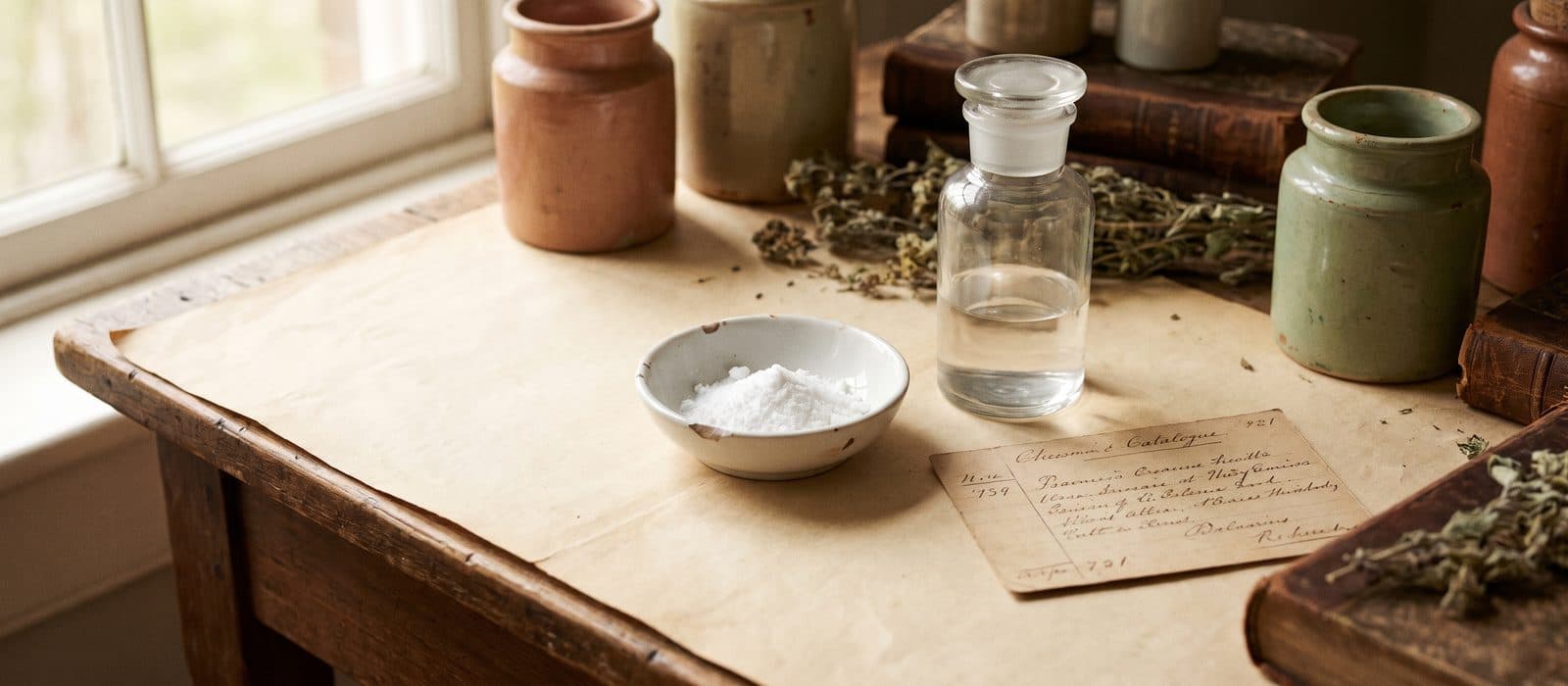
Kali phosphoricum is prepared from potassium phosphate, a white, water-soluble mineral salt. "Kali" is the old pharmaceutical Latin for potassium, from the same Arabic root as "alkali", and "phosphoricum" names the phosphate. Our guide to what is in a homeopathic remedy covers how a salt like this becomes a remedy.
It comes from the Schüssler tissue-salt tradition. Wilhelm Heinrich Schüssler, a physician in Oldenburg in northern Germany, proposed in the 1870s that twelve mineral salts found in the body could be given in low potencies to correct what he saw as disturbances in the way cells used them. Kali phosphoricum was his salt for nerve tissue. His theory was a nineteenth-century idea about cell chemistry that modern physiology does not support, and his twelve salts are now sold mainly as 6X tablets in pharmacies and health-food shops. Homeopaths later proved several of them and folded them into the materia medica; Boericke (1927) gives Kali phosphoricum a full entry.
The tissue salts are prepared by trituration: the salt is ground with lactose at a ratio of 1:10 in six successive steps to reach 6X, then pressed into tablets. Single-remedy pellets carry it further on the centesimal scale to 6C or 30C. At 6X a tablet contains about a millionth part of the original salt, far less potassium than a mouthful of most foods, and at 30C the arithmetic says no molecule remains. Our potencies guide explains both scales, and why the method is the reason mainstream science is sceptical. Potassium phosphate at medicinal strength is a prescribed medicine; that is a different product entirely and nothing on this page is about it.
What is the Kali phosphoricum picture?
The Kali phosphoricum picture is someone running on empty after a long stretch of strain. Imagine a student in the last weeks before exams, or a parent after months of broken nights, or someone two weeks past a bad virus. They read the same paragraph three times. Words slip away mid-sentence. Small noises make them jump, and bad news on the radio feels unbearable. They are irritable, then tearful, then flat. They go to bed exhausted and lie awake, or sleep and wake unrefreshed, often with a dull ache at the back of the head.
Classic texts describe this as nervous exhaustion more than physical tiredness. Boericke (1927) uses the phrase "brain fag" and describes the picture as one of mental and physical depression from excitement, overwork and worry. He adds the sensitivity, the dread, the shyness and the night terrors of children in the same state. Clarke's Dictionary (1900–1902) links it to the exhaustion that follows grief, prolonged nursing and anxious overwork.
The body follows the nerves. The person feels weak and heavy, sometimes with a hungry, empty "gone" sensation at the pit of the stomach that the old texts call nervous. Gentle movement, food and rest help; exertion, mental strain and worry make it worse.
What makes it better or worse?
The traditional modalities centre on exertion and rest. Kali phosphoricum is worse from mental effort, worry, excitement and cold, and better from rest, food, warmth and gentle motion.
| Modality | Worse | Better |
|---|---|---|
| Mind | Mental exertion, worry, excitement, bad news | Rest, quiet, distraction |
| Exertion | Physical effort, climbing stairs | Gentle motion |
| Food | Going without food | Eating (Boericke) |
| Temperature | Cold, dry air | Warmth |
| Time | Early morning, on waking unrefreshed | After sleep, when sleep comes |
Our guide to modalities, better and worse explains why a homeopath reads these before naming anything, and why "tired" by itself points nowhere.
What is Kali phosphoricum traditionally discussed for?
In homeopathic literature, Kali phosphoricum is traditionally discussed for nerve-tired states after prolonged strain. Each of these appears on one of our acute pages, where the Kali phosphoricum-like pattern sits beside its neighbours and the red flags come first.
After illness
- The foggy, worn-out mind and nervous exhaustion that linger after a virus: brain fog after a virus. Fatigue that persists for weeks after an infection is a reason to see a doctor, and that page sets out the warning signs.
Energy and stress
- The drained, brain-fried slump after prolonged stress: a sugar crash with fatigue. Shakiness, sweating or confusion in someone with diabetes, or anyone on glucose-lowering medicine, is a medical situation first.
Sleep and overwork
- The classic texts' student or carer whose mind is too tired to stop: exhausted, yet lying awake or waking unrefreshed. No acute page on this site uses the Kali phosphoricum picture for sleep, but our guide to sleeplessness as a pattern explains how a homeopath reads an overworked, unrefreshing night.
What is Kali phosphoricum not?
Kali phosphoricum is not "the tiredness remedy", and it is not a potassium supplement. The first misreading turns a whole picture into one word; the second confuses a potentised salt with nutrition. Tiredness belongs to many traditional pictures: the dull, droopy, heavy-lidded one, the apathetic one who has stopped caring after grief, the giddy, hollow one after nights of nursing. Kali phosphoricum is the sensitive, irritable, worn-out mind after strain. And at 6X or 30C there is no meaningful amount of potassium or phosphate in a tablet, so it cannot stand in for a prescribed mineral or correct a blood result.
Persistent tiredness has many causes a doctor can find: anaemia, thyroid problems, diabetes, depression, sleep apnoea, infections and others. Fatigue that lasts more than a few weeks, unexplained weight loss, breathlessness, fainting, confusion, or low mood with any thoughts of self-harm needs medical care, and the last needs it urgently. Our guides to red flags first and homeopathy alongside conventional care cover how these fit together.
Homeopaths separate Kali phosphoricum from its neighbours like this:
| Picture | Where it sits | Defining feature | Key modality |
|---|---|---|---|
| Kali phosphoricum | Nervous exhaustion from strain | Foggy, irritable, sensitive, dreading; sleep does not restore | Worse mental effort and worry; better rest and food |
| Phosphoricum acidum | Exhaustion after grief or loss of fluids | Apathetic, indifferent, slow to answer; has stopped caring | Worse exertion and talking; better a short sleep |
| Gelsemium | Dull, heavy weakness | Droopy eyelids, trembling, wants to be left alone; thirstless | Worse anticipation; better after passing urine |
| Cocculus | Exhaustion from lost sleep and nursing | Hollow, giddy, slowed; nausea with motion | Worse loss of sleep and motion; better lying quietly |
What potencies is Kali phosphoricum sold in?
Kali phosphoricum is sold most often as 6X tissue-salt tablets, the form in which Schüssler's salts are usually found, with 6C and 30C single-remedy pellets also available from homeopathic manufacturers. Potency describes the preparation process, not an amount of salt: 6X means six successive 1:10 dilutions, and 30C means thirty successive 1:100 dilutions with succussion between them. Our potencies guide explains both scales and what remains in the tablet or vial.
This page deliberately gives no frequency or instructions for taking Kali phosphoricum, whether as a tissue salt or a single remedy. That depends on a whole case, not a remedy name. Read the product label, and talk to a qualified practitioner about an individual situation.
What remedy lists don't tell you
Two things the "remedies for fatigue" lists leave out:
- The tiredness is in the mind and the nerves, not the muscles. Lists put Kali phosphoricum under exhaustion and leave it there. The classic picture is specific: the person who can still walk but cannot think, who startles at a door closing, and who dreads the next demand. Someone whose legs are heavy but whose mind is calm and content is describing a different state.
- The tissue-salt label and the homeopathic picture are two traditions. Schüssler's salts were built on a theory of cell minerals, sold by function ("nerve nutrient" in old packaging). The homeopathic picture comes from provings and clinical description. The same tablet sits in both, and reading the tissue-salt claim as a description of the person loses the sensitivity, the dread and the unrefreshing sleep that homeopaths actually compare.
Where the Kali phosphoricum picture appears on this site
Acute pages that discuss this picture among their educational patterns, with the pattern name each page uses.
- What homeopathic remedy for a sugar crash with fatigue?Kali phosphoricum-like nerve-tired pattern
- What homeopathic remedy for brain fog after a virus?Kali phosphoricum-like nerve-tired pattern
Not sure whether a picture fits?
A remedy profile describes a picture; it cannot tell you whether that picture matches what you are seeing. An acute consultation starts from the case itself: onset, sensations, what changes it, and the red flags.
Acute consultation · $45Frequently asked questions
- What is Kali phosphoricum?
- Kali phosphoricum is a homeopathic remedy and Schüssler tissue salt prepared from potassium phosphate. In homeopathy it names a traditional picture of nervous exhaustion: the mind worn thin by overwork, worry or a long illness, with poor concentration, irritability, sensitivity and sleep that does not restore. It is a description homeopaths use to compare cases, not evidence that it works for fatigue or any other condition.
- What is Kali phosphoricum used for in homeopathy?
- Homeopathic literature traditionally discusses Kali phosphoricum for nerve-tired states after prolonged strain: the foggy, worn-out mind after a virus, and the drained, brain-fried slump after stress, study or a sugar crash. The picture is defined by mental exhaustion with sensitivity and irritability, not by the name of the complaint. Fatigue that lasts for weeks, low mood with thoughts of self-harm, or confusion and fainting needs medical care first.
- What is Kali phosphoricum 30C used for?
- Kali phosphoricum is most often sold as 6X tissue-salt tablets; 30C is also available as a single remedy but is less common. In the tradition the potency does not change the picture; Kali phosphoricum 30C is discussed for the same nerve-tired, overworked state as the tissue salt. What 30C and 6X mean as dilutions is explained in our potencies guide.
- How is Kali phosphoricum taken?
- This page does not give instructions on how or how often to take any remedy or tissue salt, because that depends on a whole case rather than on a remedy name. The product label carries the manufacturer's directions, and a qualified practitioner can advise on an individual situation. Exhaustion that does not lift belongs with a doctor first.
- Where can I buy Kali phosphoricum?
- Pharmacies and health-food shops sell Kali phosphoricum as 6X tissue-salt tablets, and homeopathic manufacturers sell it as single-remedy pellets in 6C or 30C. This site also prepares custom single remedies to order: you name the remedy and potency, and the details are confirmed by email before anything is made. The order form does not give advice on which remedy to choose.
- What is Kali phosphoricum made from?
- Kali phosphoricum is made from potassium phosphate, a white mineral salt. It is ground with milk sugar through the first potency steps, then diluted and succussed, or in the tissue-salt tradition pressed into 6X tablets. At these potencies it is not a meaningful source of potassium or phosphate and is not a substitute for any supplement or prescribed medicine.
This guide is educational only and is not medical advice or a personalized remedy recommendation. Acute symptoms can become urgent; when in doubt, seek professional evaluation.