Remedy profile
Gelsemium sempervirens in Homeopathy: Uses, Picture and Limits
What homeopathic Gelsemium is made from, the heavy, droopy, trembling picture homeopaths describe, what changes it, the potencies sold, and what it is not.
By Homeopathic BenefitsPublished 7 min read
Key takeaways
- Gelsemium is the heavy, droopy picture. Heavy eyelids, heavy limbs, a dull head and a wish to lie still and be left alone are its classic keynotes.
- Trembling weakness from anticipation is the other half. The legs that go weak and the mouth that goes dry before an exam or a speech belong to the same picture.
- Thirstlessness is a quiet but telling detail. Even with a feverish head, the Gelsemium picture is traditionally described as not wanting to drink.
- It comes from a highly poisonous vine. Yellow jessamine is toxic in every part; homeopathic potencies are diluted far past the point where the raw plant is a concern.
- Weakness has red flags. Sudden weakness on one side, confusion, a stiff neck with fever, or difficulty breathing is a medical emergency, not a remedy picture.
The short answer
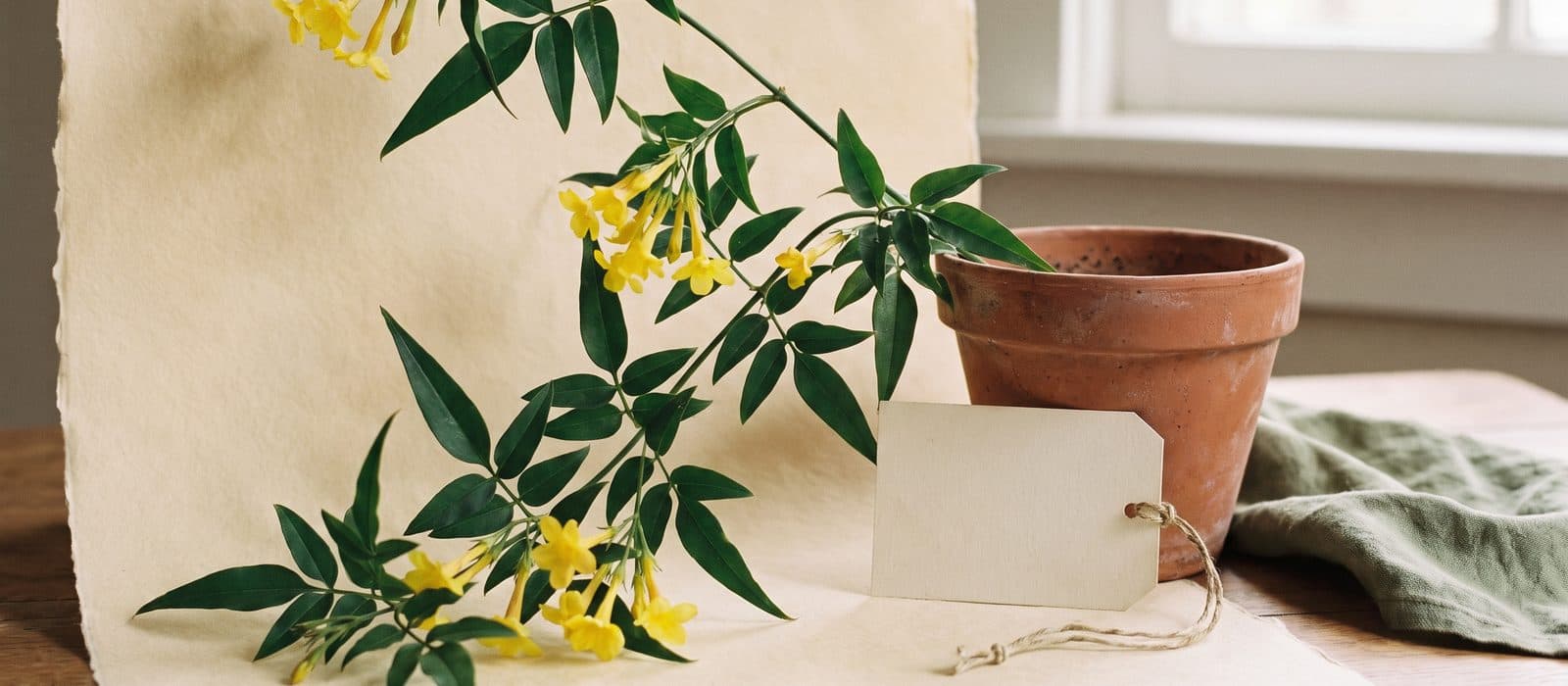
Gelsemium is a homeopathic remedy prepared from the root of yellow jessamine, Gelsemium sempervirens, a climbing vine with fragrant yellow trumpet flowers native to the south-eastern United States. In homeopathy it names a traditional picture rather than a treatment: heaviness, droopiness and trembling. The classic descriptions are eyelids too heavy to hold open, limbs like lead, a dull head, little thirst, and a person who wants to lie still and be left alone. The same weak, shaky quality appears in the traditional picture of anticipation, where the knees tremble and the mind goes blank before an ordeal. Gelsemium entered homeopathy through American physicians in the nineteenth century, and the raw plant is highly poisonous.
| Latin name | Gelsemium sempervirens |
|---|---|
| Abbreviation | Gels. |
| Common name | Yellow jessamine, Carolina jasmine |
| Source | Fresh root of a flowering vine of the south-eastern United States (Gelsemiaceae) (plant kingdom) |
| Commonly sold potencies | 6C, 30C, 200C |
| First proving | Introduced in the United States in the mid-19th century; documented in E. M. Hale, New Remedies (1864) |
What is Gelsemium made from?
Homeopathic Gelsemium is prepared from the fresh root of Gelsemium sempervirens, known as yellow jessamine or Carolina jasmine. Despite the common name it is not a true jasmine. It is an evergreen vine of the south-eastern United States and Central America that climbs fences and trees and covers them in fragrant, bright yellow, trumpet-shaped flowers in late winter and spring. It is the state flower of South Carolina.
It is also one of the more dangerous garden plants. Every part of the plant contains gelsemine and related alkaloids, which act on the nervous system; swallowing the plant can cause weakness, drooping eyelids, double vision and breathing failure, and children have been poisoned by sucking nectar from the flowers. The plant should never be eaten, brewed or used as a herbal preparation at home.
The homeopathic preparation starts from a mother tincture of the root, which is then diluted and succussed step by step to the potency on the label. At the common potencies the arithmetic says no molecule of the original plant remains. Our potencies guide explains that honestly, including why it is also the reason mainstream science is sceptical of homeopathy.
It is worth noticing that the poisoning picture and the homeopathic picture overlap: drooping lids, heaviness, weakness and trembling. That overlap is the core idea of a homeopathic proving, where a substance is described by what it does to a healthy person.
What is the Gelsemium picture?
The Gelsemium picture is a person who has gone heavy. The eyelids droop as if weighted, the head feels dull and full, the limbs are like lead, and the whole body seems to ask to lie down and not be spoken to. Thinking is slow; the person answers questions, but from a distance, as though through fog. Boericke (1927) describes general prostration with "dizziness, drowsiness, dullness and trembling", and that four-word sequence is a fair summary of the state.
At the start of a feverish cold the picture is the slow onset over a day or two, the heavy aching muscles, the chill that runs up and down the back, the flushed, dull face, and a striking lack of thirst despite the heat. The person is not restless. They lie still, partly because moving feels like too much effort, and want the room quiet.
The second face of the same picture is anticipation. Classic texts describe the dread of an ordeal: the exam, the interview, the first night on stage. The Gelsemium version is not the racing, hurried anxiety of some other pictures but a weak, trembling, paralysed one. The knees shake, the hands tremble, the mouth goes dry, the mind goes blank, and there may be a sudden urge for the toilet. Older materia medica attributes much of the picture to "bad effects from fright, fear, exciting news". The person wants to hide from the ordeal rather than rush towards it.
What makes it better or worse?
The traditional modalities tie Gelsemium to emotion, damp and stillness. It is worse from anticipation and bad news, and better from passing water and from fresh air.
| Modality | Worse | Better |
|---|---|---|
| Emotion | Anticipation, bad news, excitement, thinking about the complaint | Being left quiet and alone |
| Weather | Damp, foggy weather; before a thunderstorm; warm, humid spells | Open air |
| Time | Around 10 a.m. (Boericke) | No consistent keynote |
| Position and motion | Exertion | Bending forward; continued gentle motion (Boericke) |
| Other | Tobacco smoke | After passing a large amount of urine (a classic keynote in headaches) |
A homeopath reads these alongside the symptoms alongside the symptom: the thirstlessness and the heavy lids often say more than the headache itself. Our guide to modalities, better and worse explains why.
What is Gelsemium traditionally discussed for?
In homeopathic literature, Gelsemium is traditionally discussed for heavy, dull, droopy states and for trembling anticipation. Each of these appears on one of our acute pages, where the Gelsemium-like pattern sits beside its neighbours and the red flags come first.
Anticipation and nerves
- The weak, trembling dread before an ordeal: anticipatory anxiety and anxiety before an exam.
- Shaking knees and a blank mind before speaking: stage fright before speaking.
- The paper-dry mouth of nerves: dry mouth before a presentation.
Colds and the aftermath of illness
- The slow, heavy, thirstless start of a cold: the very beginning of a common cold.
- Heaviness and dullness that linger: brain fog after a virus.
Heavy heads and fatigue
- A dull, heavy head with drooping lids: a tension headache during a stressful day and a headache from eye strain.
- Exhaustion with heavy limbs: jet lag with exhaustion and a sugar crash with fatigue.
What is Gelsemium not?
Gelsemium is not "the anxiety remedy" or "the flu remedy". The commonest misreading is to reach for the name because of a label: nerves before an event, or the start of a cold. The picture is the heaviness, droopiness and trembling weakness; an anxious person who is restless, hurried or panicky has a different traditional picture, and a cold that arrives suddenly and violently belongs elsewhere too. Anxiety that disrupts sleep, work or daily life over weeks is a conversation with a doctor or therapist, and illness with severe weakness, confusion or a stiff neck needs urgent assessment.
Homeopaths separate Gelsemium from its neighbours like this:
| Picture | Where it sits | Defining feature | Key modality |
|---|---|---|---|
| Gelsemium | Heavy, droopy, slow onset; trembling anticipation | Heavy lids, weak legs, dullness, little thirst | Worse anticipation and bad news; better passing urine |
| Argentum nitricum | Anticipation with hurry | Rushing, impulsive, talkative nerves; arriving far too early | Worse warmth; better cool air |
| Aconite | Sudden onset after cold wind or fright | Intense fear and restlessness, coming on within hours | Worse at night; better open air |
| Bryonia | Slow-onset feverish illness | Irritable, very thirsty, wants to keep perfectly still because motion hurts | Worse the least motion; better pressure and rest |
The Gelsemium and Bryonia pictures both lie still, which is why they are so often confused. The traditional distinction is the reason: Gelsemium lies still because everything is too heavy, Bryonia because every movement hurts. Gelsemium is thirstless; Bryonia drinks large amounts.
What potencies is Gelsemium sold in?
Gelsemium sempervirens is sold most often as 30C pellets, the common shelf potency for single remedies, with 6C and 200C also widely available. Potency describes the preparation process, not an amount of plant: 30C means thirty successive 1:100 dilutions with succussion between them. Our potencies guide explains the scale and what remains in the vial.
This page deliberately gives no frequency or instructions for taking Gelsemium. That depends on a whole case, not a remedy name. Read the product label, and talk to a qualified practitioner about an individual situation.
What remedy lists don't tell you
Two things the "remedies for exam nerves" lists leave out:
- The kind of anxiety decides it, not the event. Lists sort remedies by occasion: exams, flights, performances. The tradition sorts them by how the person reacts. The student who goes quiet, weak and blank and the student who paces, talks fast and arrives an hour early are facing the same exam with two very different pictures. Writing down what the nerves actually look like is more useful than naming the occasion.
- The thirst is the detail people forget to mention. Someone describing the start of a cold talks about the aching and the heavy head; almost nobody volunteers that they have not wanted a drink all day. In the traditional picture that absence of thirst is one of the clearest pointers, and it is the kind of companion symptom our guide to the first colds of the school year suggests noting down.
Where the Gelsemium sempervirens picture appears on this site
Acute pages that discuss this picture among their educational patterns, with the pattern name each page uses.
- What homeopathic remedy for a headache from eye strain?Gelsemium-like heavy-lidded dull pattern
- What homeopathic remedy for a sugar crash with fatigue?Gelsemium-like heavy droopy fatigue pattern
- What homeopathic remedy for a tension headache during a stressful day?Gelsemium-like dull, heavy, droopy pattern
- What homeopathic remedy for anticipatory anxiety?Gelsemium-like trembling weakness pattern
- What homeopathic remedy for anxiety before an exam?Gelsemium-like trembling stage fright pattern
- What homeopathic remedy for brain fog after a virus?Gelsemium-like heavy droopy fatigue pattern
- What homeopathic remedy for dry mouth before a presentation?Gelsemium-like paper-mouth stage pattern
- What homeopathic remedy for jet lag with exhaustion?Gelsemium-like heavy-droop arrival pattern
- What homeopathic remedy for stage fright before speaking?Gelsemium-like trembling stage-fright pattern
- What homeopathic remedy for the very beginning of a common cold?Gelsemium-like heavy fatigue pattern
Not sure whether a picture fits?
A remedy profile describes a picture; it cannot tell you whether that picture matches what you are seeing. An acute consultation starts from the case itself: onset, sensations, what changes it, and the red flags.
Acute consultation · $45Frequently asked questions
- What is Gelsemium?
- Gelsemium is a homeopathic remedy prepared from the root of yellow jessamine, Gelsemium sempervirens, a climbing vine of the south-eastern United States. In homeopathy it names a traditional picture of heaviness, droopiness and trembling: drooping eyelids, heavy limbs, dullness, and the weak, shaky dread before an ordeal. It is a description homeopaths use to compare cases, not evidence that it works for anything.
- What is Gelsemium used for in homeopathy?
- Homeopathic literature traditionally discusses Gelsemium for two related states: the heavy, dull, droopy, thirstless start of a feverish cold, and the trembling, weak-kneed anticipation before an exam, a speech or a performance. In both, the defining feature is heaviness and weakness rather than restlessness. Severe weakness, confusion, a stiff neck with fever, or anxiety that disrupts daily life needs a clinician first.
- What is Gelsemium 30C used for?
- 30C is the common shelf potency for Gelsemium, the one most single-remedy tubes and home kits carry. In the tradition, the potency does not change the picture: Gelsemium 30C belongs to the same heavy, droopy, trembling description as any other Gelsemium. Our potencies guide explains what 30C means as a dilution.
- How is Gelsemium taken?
- This page does not give instructions on how or how often to take any remedy, because that depends on a whole case rather than on a remedy name. The product label carries the manufacturer's directions, and a qualified practitioner can advise on an individual situation. If weakness or illness is severe or getting worse, medical care comes first.
- Where can I buy Gelsemium?
- Pharmacies, health-food shops and homeopathic manufacturers sell Gelsemium sempervirens as single-remedy pellets, most often in 30C. This site also prepares custom single remedies to order: you name the remedy and potency, and the details are confirmed by email before anything is made. The order form does not give advice on which remedy to choose.
- What is Gelsemium made from?
- Homeopathic Gelsemium is prepared from the fresh root of yellow jessamine, Gelsemium sempervirens, steeped into a mother tincture and then diluted and succussed step by step to the labelled potency. The living plant is highly poisonous: every part contains gelsemine and related alkaloids, and children have been poisoned by sucking the nectar. The plant and its flowers should never be eaten or brewed.
This guide is educational only and is not medical advice or a personalized remedy recommendation. Acute symptoms can become urgent; when in doubt, seek professional evaluation.