Remedy profile
Ignatia amara in Homeopathy: Uses, Picture and Limits
What homeopathic Ignatia amara is made from, the sighing, emotional-shock picture homeopaths describe, what changes it, the potencies sold, and its limits.
By Homeopathic BenefitsPublished 7 min read
Key takeaways
- Ignatia is the picture of the first raw days after a shock. Sighing, a lump in the throat, sudden tears and swinging moods are its classic keynotes.
- Contradiction is its signature. Classic texts describe symptoms that behave the opposite way to what you would expect, such as a sore throat that feels better from swallowing solid food.
- It is a reaction, not a condition. The picture describes how some people react to loss or disappointment; grief itself needs time, people and, when it overwhelms, professional support.
- It comes from a seed that contains strychnine. The St Ignatius bean is seriously poisonous; homeopathic potencies are diluted far past the point where the raw seed is a concern.
- Some distress is urgent. Thoughts of self-harm, not eating or sleeping for weeks, or a panic that will not settle needs a doctor or a crisis line, not a remedy profile.
The short answer
Ignatia amara is a homeopathic remedy prepared from the seeds of the St Ignatius bean, Strychnos ignatii, a woody climbing vine of the Philippines closely related to the strychnine tree. In homeopathy it names a traditional picture rather than a treatment: the acute reaction to emotional shock, loss or disappointment. Classic materia medica describes frequent deep sighing, a lump in the throat, moods that swing from tears to laughter, a person who keeps the hurt to themselves, and physical symptoms that contradict each other. Hahnemann documented it among his first remedies, in 1805. Nothing about the picture replaces support for someone grieving, and distress that is severe or lasting needs professional help.
| Latin name | Ignatia amara |
|---|---|
| Abbreviation | Ign. |
| Common name | St Ignatius bean |
| Source | Seeds of a woody climbing vine of the Philippines (Strychnos ignatii, Loganiaceae) (plant kingdom) |
| Commonly sold potencies | 6C, 30C, 200C |
| First proving | Hahnemann, Fragmenta de viribus medicamentorum (1805); expanded in Materia Medica Pura (1811–1821) |
What is Ignatia made from?
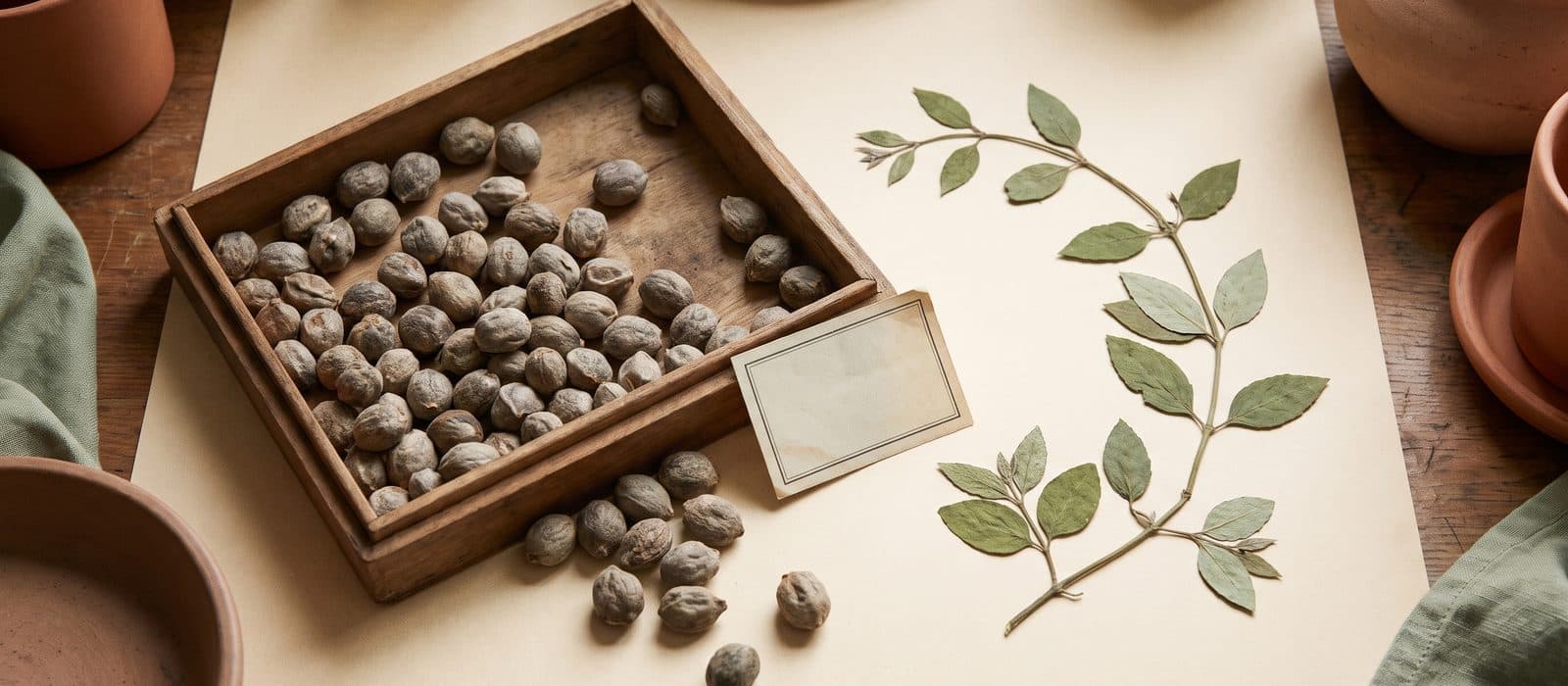
Homeopathic Ignatia is prepared from the seeds of Strychnos ignatii, a large woody climbing vine native to the Philippines. The fruit is a hard, pear-sized gourd holding a cluster of angular, very hard grey-brown seeds; those seeds are the St Ignatius beans. The name comes from Jesuit missionaries, who brought the seeds to Europe in the seventeenth century and named them after the founder of their order.
The plant belongs to the same genus as Strychnos nux-vomica, the source of Nux vomica, and like it the seeds contain strychnine and brucine. They are seriously poisonous: strychnine causes violent muscle spasms and can be fatal in small amounts. The bean has no place in a kitchen or a herbal preparation.
The homeopathic preparation grinds the seeds, steeps them into a tincture and then dilutes and succusses them step by step to the labelled potency. At the common potencies, the arithmetic says no molecule of the original seed remains. Our potencies guide explains that honestly, including why it is also the reason mainstream science is sceptical.
What is the Ignatia picture?
The Ignatia picture is someone in the first raw days after something has hit them: bad news, a loss, a betrayal, a disappointment, a sudden fright. They are holding it in. They sigh deeply and often, sometimes without noticing, as if the breath will not go all the way down. There is a lump in the throat that swallowing does not shift. Tears come suddenly and then stop; laughter can arrive at the wrong moment. Moods change by the hour. Boericke (1927) calls it "the remedy of great contradictions" and describes a person who is "silently brooding", sad and "not communicative".
The physical side follows the same paradoxical logic. Classic texts describe a sore throat that is better from swallowing solid food and worse from swallowing nothing, an empty, sinking feeling in the stomach that eating does not fill, a headache "as if a nail were driven out through the side", and a cough that the more one coughs, the more one needs to cough. Kent emphasised that the symptoms do not follow the usual rules, and that this unpredictability is itself the keynote.
Sleep is often disturbed. The person lies awake replaying events, jerks as they drift off, or has vivid dreams after a fright. During the day they may be hypersensitive to noise, smells and tobacco smoke, and react to small things with an intensity that surprises the people around them.
What makes it better or worse?
The traditional modalities centre on emotion and stimulants. Ignatia is worse from grief, coffee and tobacco, and better from changing position and, paradoxically, while eating.
| Modality | Worse | Better |
|---|---|---|
| Emotion | Grief, shock, disappointment, being contradicted | Being alone with it; distraction |
| Stimulants | Coffee, tobacco smoke, strong smells | None listed |
| Time | Morning; after meals (Boericke) | No consistent keynote |
| Temperature | Open air and external warmth (Boericke) | No consistent keynote |
| Position and eating | Lying on the painful side is a variable keynote | Changing position; while eating (Boericke) |
The modalities matter less here than the emotional sequence: what happened, how soon, and how the person is carrying it. That is the territory of the symptoms alongside the symptom.
What is Ignatia traditionally discussed for?
In homeopathic literature, Ignatia is traditionally discussed for the acute reaction to emotional shock and for the jangled, sighing states that look like it. Each of these appears on one of our acute pages, where the Ignatia-like pattern sits beside its neighbours and the red flags come first.
Grief and emotional shock
- The waves of exhaustion after hard news: exhaustion after bad news.
- Disturbed sleep and vivid dreams after a fright: nightmares after a fright. Our guide to sleeplessness as a pattern covers how sleep is read.
Jangled nerves after stimulants
- Sighing, jumpy, emotional jitters: jitters after too much caffeine.
- The anxious, emotional morning after drinking: anxiety after drinking.
What is Ignatia not?
Ignatia is not "the grief remedy", and the commonest misreading is to treat grief as a symptom with a matching name. Grief is a normal human response to loss. The Ignatia picture describes one particular way some people react in the acute phase, with sighing, contradiction and held-in emotion; many grieving people look nothing like it, and none of them need a remedy profile to grieve properly. Support from people, time, and when needed a doctor, counsellor or bereavement service, comes first. Our guide to homeopathy alongside conventional care sets out where the line sits.
Ignatia is also not a picture for long-standing low mood. Homeopaths separate it from its neighbours like this:
| Picture | Where it sits | Defining feature | Key modality |
|---|---|---|---|
| Ignatia | Acute reaction to shock or loss | Sighing, lump in throat, swinging moods, contradictory symptoms | Worse coffee and tobacco; better changing position |
| Natrum muriaticum | Grief carried for a long time | Reserved, dwells on the past, cries alone | Worse consolation and sun; better open air |
| Pulsatilla | Weepy, changeable states | Cries easily and openly, wants company and comfort | Better consolation and open air; worse warm rooms |
| Aconite | Sudden fright | Intense fear and restlessness right after the shock | Worse at night; better open air |
Ignatia and Natrum muriaticum are traditionally described as acute and chronic faces of a similar story: Ignatia the first raw weeks, Natrum muriaticum the grief that has settled in and been kept private for months or years. Pulsatilla's tears are the opposite in one telling detail: she wants to be comforted, where the Ignatia picture turns away.
What potencies is Ignatia sold in?
Ignatia amara is sold most often as 30C pellets, the common shelf potency for single remedies, with 6C and 200C also widely available. Potency describes the preparation process, not an amount of seed: 30C means thirty successive 1:100 dilutions with succussion between them. Our potencies guide explains the scale and what remains in the vial.
This page deliberately gives no frequency or instructions for taking Ignatia. That depends on a whole case, not a remedy name. Read the product label, and talk to a qualified practitioner about an individual situation.
What remedy lists don't tell you
Two things that lists of "remedies for grief and stress" leave out:
- The paradox is the point. Lists describe Ignatia as sadness and sighing, which fits half the people in any waiting room. What the classic authors found distinctive was the contradiction: the throat better from swallowing bread, the empty stomach that food does not fill, laughter at a funeral. A homeopath listens for the symptom that does not make sense; it is often the most characteristic one.
- The picture has a timeframe. Every older description ties Ignatia to the recent, acute phase after an event. When the same sadness has lasted months, the tradition stops reading it as an acute picture at all, and it becomes a chronic, constitutional question, and very often a medical or psychological one. Noting when it started matters as much as noting what it feels like.
Where the Ignatia amara picture appears on this site
Acute pages that discuss this picture among their educational patterns, with the pattern name each page uses.
- What homeopathic remedy for anxiety after drinking?Ignatia-like sighing emotional shock pattern
- What homeopathic remedy for exhaustion after bad news?Ignatia-like lump-in-throat grief pattern
- What homeopathic remedy for jitters after too much caffeine?Ignatia-like sighing emotional shock pattern
- What homeopathic remedy for nightmares after a fright?Ignatia-like lump-in-throat grief pattern
Not sure whether a picture fits?
A remedy profile describes a picture; it cannot tell you whether that picture matches what you are seeing. An acute consultation starts from the case itself: onset, sensations, what changes it, and the red flags.
Acute consultation · $45Frequently asked questions
- What is Ignatia amara?
- Ignatia amara is a homeopathic remedy prepared from the seeds of the St Ignatius bean, a climbing vine of the Philippines related to the strychnine tree. In homeopathy it names a traditional picture: the first raw days after a shock, a loss or a disappointment, with sighing, a lump in the throat, changeable moods and symptoms that contradict each other. It is a description homeopaths use to compare cases, not evidence that it works for grief or anything else.
- What is Ignatia used for in homeopathy?
- Homeopathic literature traditionally discusses Ignatia for the acute aftermath of emotional shock: frequent sighing, a lump in the throat, swinging from tears to laughter, sleeplessness after upsetting news, and physical symptoms that behave paradoxically. The picture describes a reaction, not a diagnosis. Grief and shock are human experiences that deserve real support, and low mood that lasts, stops someone eating or sleeping for weeks, or brings thoughts of self-harm needs a doctor or a crisis line.
- What is Ignatia 30C used for?
- 30C is the common shelf potency for Ignatia, the one most single-remedy tubes and home kits carry. In the tradition, potency does not change which picture the remedy belongs to: Ignatia 30C is discussed for the same sighing, contradictory picture as any other Ignatia. Our potencies guide explains what 30C means as a dilution.
- How is Ignatia taken?
- This page does not give instructions on how or how often to take any remedy, because that depends on a whole case rather than on a remedy name. The product label carries the manufacturer's directions, and a qualified practitioner can advise on an individual situation. If distress is severe, lasting or frightening, talk to a doctor or a crisis service first.
- Where can I buy Ignatia amara?
- Pharmacies, health-food shops and homeopathic manufacturers sell Ignatia amara as single-remedy pellets, most often in 30C. This site also prepares custom single remedies to order: you name the remedy and potency, and the details are confirmed by email before anything is made. The order form does not give advice on which remedy to choose.
- What is Ignatia amara made from?
- Homeopathic Ignatia is prepared from the hard seeds of Strychnos ignatii, the St Ignatius bean, a woody vine native to the Philippines. The seeds are ground, steeped and then diluted and succussed step by step to the labelled potency. The raw seeds contain strychnine and brucine and are seriously poisonous, so the bean itself should never be eaten or brewed.
This guide is educational only and is not medical advice or a personalized remedy recommendation. Acute symptoms can become urgent; when in doubt, seek professional evaluation.