Remedy profile
Hepar sulphuris in Homeopathy: Uses, Picture and Limits
What homeopathic Hepar sulphuris is made from, the chilly, touchy, splinter-pain picture homeopaths describe, what changes it, potencies sold, and its limits.
By Homeopathic BenefitsPublished 8 min read
Key takeaways
- Hepar sulphuris is the picture of extreme sensitivity. Homeopathic literature describes a chilly, touchy person for whom pain, touch, cold air and other people are all too much.
- Splinter-like pain is the keynote sensation. A throat, an ear, a nail edge or a stye feels as though a sharp splinter is lodged in it.
- Cold makes everything worse. The person wants to be wrapped up; uncovering even a hand can set off pain or a cough in the classic descriptions.
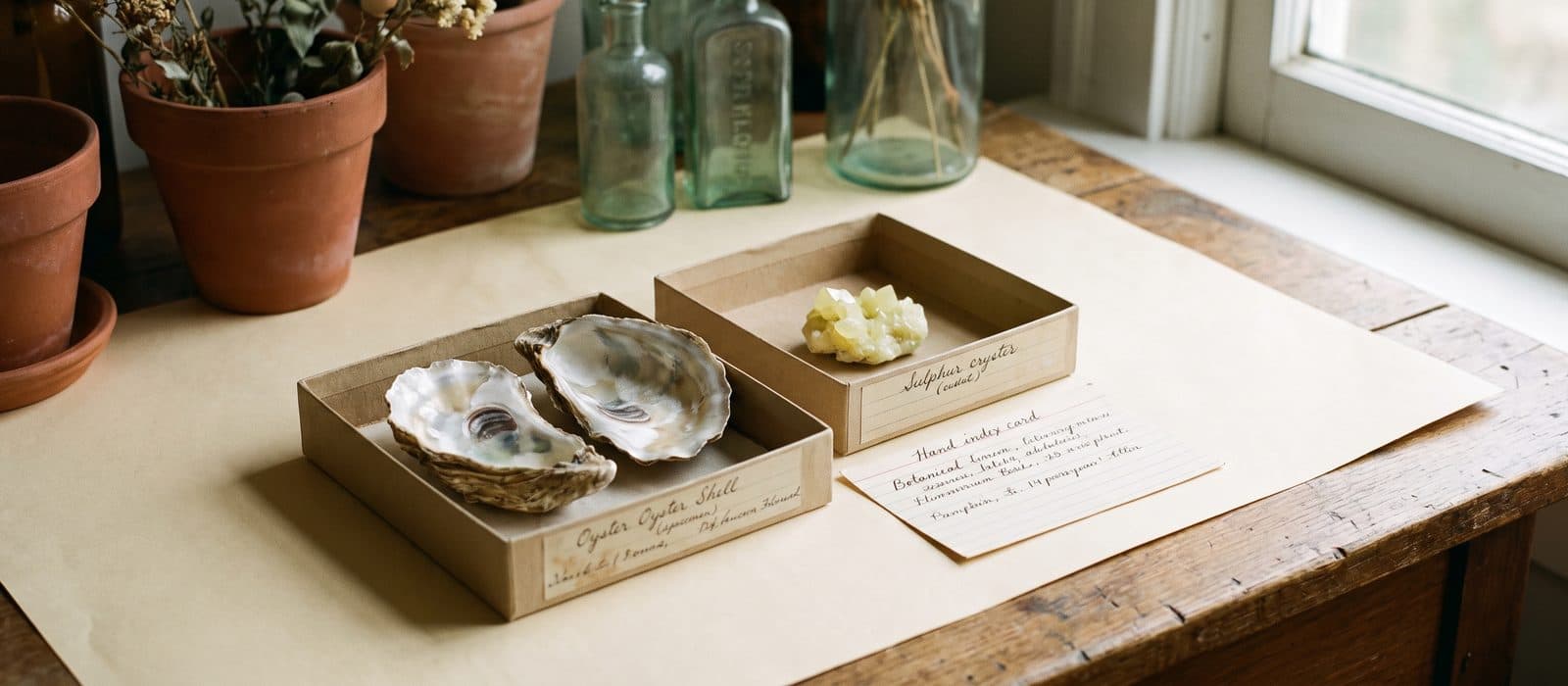
- Hahnemann made it himself. It is a calcium sulphide prepared from oyster shell and sulphur, and its full name is Hepar sulphuris calcareum.
- Local infection has red flags. Spreading redness or red streaks, fever, pus near the eye, ear discharge, or difficulty swallowing or breathing is a medical question first.
The short answer
Hepar sulphuris, in full Hepar sulphuris calcareum and often shortened to Hepar sulph, is a homeopathic remedy prepared from a calcium sulphide that Samuel Hahnemann made himself by heating oyster shell with sulphur. In homeopathy it names a traditional picture rather than a treatment: a chilly, oversensitive, irritable person with sharp, splinter-like pains and tender areas that cannot bear touch or a breath of cold air. Classic materia medica places it in painful throats, ears, styes and angry, throbbing skin and nail edges, the stage where a local inflammation has become exquisitely tender. Hahnemann documented it, and Kent's Lectures (1905) describe it as one of the most sensitive pictures in the materia medica. It is not an antibiotic substitute, and nothing about the picture replaces medical care for an infection that is spreading or comes with fever.
| Latin name | Hepar sulphuris |
|---|---|
| Abbreviation | Hep. |
| Common name | Hahnemann's calcium sulphide; Hepar sulphuris calcareum; Hepar sulph |
| Source | Impure calcium sulphide, made by heating the inner layer of oyster shells with flowers of sulphur, triturated and potentised (mineral kingdom) |
| Commonly sold potencies | 6C, 30C, 200C |
| First proving | Prepared and introduced by Hahnemann; documented in Materia Medica Pura and The Chronic Diseases (1828–1830) |
What is Hepar sulphuris made from?
Hepar sulphuris is one of the few remedies Hahnemann invented as a substance as well as a picture. He made it by heating the white, inner layer of oyster shells, which is mostly calcium carbonate, together with flowers of sulphur, the fine yellow powder of purified sulphur. The result is an impure calcium sulphide. The old chemists called sulphur compounds of this kind "liver of sulphur", from their brownish liver colour, and that is what hepar sulphuris means. Calcareum adds the calcium; labels use the long form, the short form and "Hepar sulph" interchangeably.
Because the starting powder is not soluble in the usual way, the first potency steps are made by trituration, grinding with lactose, before it is carried into liquid and then diluted and succussed. Our guide to what is in a homeopathic remedy explains the process, and our guide to reading Latin remedy names explains why an old chemist's name survives on modern labels.
The raw compound is not a classic poison like arsenic, but it is an irritant: with moisture or acid it gives off hydrogen sulphide, the rotten-egg gas, which is itself toxic in enough quantity. It is not something to make or handle at home. At the common potencies, the arithmetic says no molecule of the original powder remains; our potencies guide works through what that means and why it is also the reason mainstream science is sceptical.
What is the Hepar sulphuris picture?
The Hepar sulphuris picture is the person who flinches before you touch them. They are wrapped in a scarf, sitting away from the window, and the sore throat feels as if a fishbone or a splinter is stuck in it each time they swallow. The ear aches sharply when a door opens and lets in cold air. The hangnail is so tender that the brush of a sleeve makes them jerk the hand away. And they are short with everyone: a question asked too slowly, a draught, a noise, any of it can provoke a flash of temper out of all proportion.
Kent's Lectures (1905) describe this oversensitivity as the core of the remedy: sensitive to pain, to cold, to touch and to impressions, so that the slightest thing is resented and pain can make the person faint. Boericke (1927) puts the same idea in physical terms, noting that the person is chilly, hypersensitive, and that the tissues are inclined to suppurate, to form pus.
The pain itself is sharp and splinter-like rather than dull or throbbing alone. The affected part is usually tender, sometimes swollen, and classic texts describe discharges and sweat with a sour smell, compared by the old authors to old cheese. The person sweats easily, yet cannot bear to be uncovered. Classic texts also describe a cough, often croupy and rough, that comes on when any part of the body gets cold, a hand or a foot pushed out from under the blanket. In Boenninghausen's famous sequence for croup, Hepar was the last of three pictures, after Aconite and Spongia; today croup that makes breathing hard is a reason for urgent care.
What makes it better or worse?
The traditional modalities centre on cold and touch. Hepar sulphuris is worse from dry cold air, draughts and the lightest touch, and better from warmth, wrapping up and damp weather.
| Modality | Worse | Better |
|---|---|---|
| Temperature | Dry cold air, cold wind, draughts, uncovering any part | Warmth, wrapping up, especially the head |
| Weather | Dry, cold weather | Damp, wet weather |
| Touch | The lightest touch on the painful part | No consistent keynote |
| Position | Lying on the painful side | No consistent keynote |
| Food and drink | Cold drinks and cold food | Warm drinks; some descriptions mention a craving for sour things |
Better in damp weather is unusual enough that homeopaths read it as a strong pointer; our guide to modalities, better and worse explains why.
What is Hepar sulphuris traditionally discussed for?
In homeopathic literature, Hepar sulphuris is traditionally discussed for tender, splinter-pain local states in a chilly, oversensitive person. Each of these appears on one of our acute pages, where the Hepar-like pattern sits beside its neighbours and the red flags come first.
Throats
- Sharp, splinter-like pain very sensitive to cold air: the first day of a sore throat and a sore throat from dry air.
Ears and eyes
- Ear pain that cannot bear cold air or touch: an earache during a mild illness and swimmer's ear irritation.
- An acutely tender lid bump that makes the person flinch: a stye on the eyelid.
Skin, nails and small wounds
- Throbbing, exquisitely sensitive nail edges: a sore hangnail and an ingrown toenail.
- A small wound that turns angry and tender early: redness after a cat scratch and a painful papercut.
- Tender, touch-sensitive pustules after shaving: razor burn on the face.
What is Hepar sulphuris not?
Hepar sulphuris is not "the remedy for infections", and it is not a substitute for antibiotics. The commonest misreading is to match the name to the presence of pus. In the tradition, the picture is the extreme sensitivity to touch and cold, the splinter-like pain and the chilly, irritable person; a sore that is painless, or a hot, flushed, early state, reads as something else.
Local infections can become serious, and the red flags are concrete. Redness that is spreading, red streaks running up a limb, a fever, or swelling that keeps growing need medical care the same day. A cat bite, as opposed to a scratch, should be seen by a clinician. Redness and swelling around the eye, an eyelid swollen shut, or any change in vision is urgent. Ear pain with discharge, high fever or swelling behind the ear needs a doctor. A sore throat with drooling, difficulty swallowing or breathing, a muffled voice or a stiff neck is an emergency. Anyone with diabetes or poor circulation should have a sore or infected toe looked at early. Our guide to red flags first sets these out.
Homeopaths separate Hepar sulphuris from its neighbours like this:
| Picture | Where it sits | Defining feature | Key modality |
|---|---|---|---|
| Hepar sulphuris | Tender, splinter-pain local states | Extreme sensitivity to touch, cold and pain; irritable | Worse dry cold and touch; better warmth and damp weather |
| Silicea | Slow, lingering local states | Chilly and yielding rather than touchy; slow to resolve | Worse cold; better warmth and wrapping the head |
| Mercurius | Moist, offensive throats and mouths | Extra saliva, offensive breath, night sweats | Worse both heat and cold; worse at night |
| Belladonna | Sudden, early, hot states | Bright red, throbbing, hot, before tenderness and pus | Worse jar and light; better semi-upright |
What potencies is Hepar sulphuris sold in?
Hepar sulphuris is sold most often as 30C pellets, the common shelf potency for single remedies, with 6C and 200C also widely available. Labels may read Hepar sulphuris, Hepar sulph or Hepar sulphuris calcareum; they are the same remedy. Potency describes the preparation process, not an amount of calcium sulphide: 30C means thirty successive 1:100 dilutions with succussion between them. Our potencies guide explains the scale and what remains in the vial.
This page deliberately gives no frequency or instructions for taking Hepar sulphuris. That depends on a whole case, not a remedy name. Read the product label, and talk to a qualified practitioner about an individual situation.
What remedy lists don't tell you
Two things the short lists leave out:
- The flinch is the picture. Many lists describe Hepar as a remedy for boils, abscesses or "infections with pus". What the classic authors found characteristic was the person's response: the scarf, the irritability, the flinch before touch, the cough set off by a cold hand. A tender spot on a calm, warm-blooded person who does not mind a draught does not fit, whatever the spot looks like.
- Timing matters in the old texts. Classic writers placed Hepar at the stage where a local inflammation has become exquisitely tender and is heading towards pus, and they distinguished it from the early, hot, red stage and the slow, lingering stage that follow other pictures. That staging is one reason the same nail or throat can be discussed under different remedies on our acute pages. It is also exactly the point at which a spreading or worsening infection needs a clinician, and our guide to observing a sick child covers how to watch for it in children.
Where the Hepar sulphuris picture appears on this site
Acute pages that discuss this picture among their educational patterns, with the pattern name each page uses.
- What homeopathic remedy for a painful papercut?Hepar sulphuris-like infection-sensitive pattern
- What homeopathic remedy for a sore hangnail with redness?Hepar sulphuris-like sharp, sensitive infection pattern
- What homeopathic remedy for a sore throat from dry air?Hepar sulphuris-like sharp splinter sensation pattern
- What homeopathic remedy for a stye on the eyelid?Hepar sulphuris-like tender sensitive stye pattern
- What homeopathic remedy for an earache during an otherwise mild illness?Hepar sulphuris-like hypersensitive, sharp pain pattern
- What homeopathic remedy for an ingrown toenail?Hepar sulphuris-like sharp, sensitive infection pattern
- What homeopathic remedy for razor burn on the face?Hepar sulphuris-like tender pustular pattern
- What homeopathic remedy for redness after a cat scratch?Hepar sulphuris-like infection-sensitive pattern
- What homeopathic remedy for swimmer’s ear irritation?Hepar sulphuris-like sensitive, splinter ear pain pattern
- What homeopathic remedy for the first day of a sore throat?Hepar sulphuris-like sharp splinter sensation pattern
Not sure whether a picture fits?
A remedy profile describes a picture; it cannot tell you whether that picture matches what you are seeing. An acute consultation starts from the case itself: onset, sensations, what changes it, and the red flags.
Acute consultation · $45Frequently asked questions
- What is Hepar sulphuris?
- Hepar sulphuris, in full Hepar sulphuris calcareum, is a homeopathic remedy prepared from a calcium sulphide that Hahnemann made himself from oyster shell and sulphur. In homeopathy it names a traditional picture of extreme sensitivity: chilly, touchy and irritable, with sharp, splinter-like pains and areas so tender that the lightest touch or a breath of cold air is too much. It is a description homeopaths use to compare cases, not evidence that it works for infections or any other condition.
- What is Hepar sulphuris used for in homeopathy?
- Homeopathic literature traditionally discusses Hepar sulphuris for painful, tender local states: a sore throat with splinter-like pain, an earache sensitive to cold air, a stye, a throbbing hangnail or ingrown nail, or a scratch that has turned angry and tender. The extreme sensitivity to touch and cold defines the picture. Spreading redness, red streaks, fever, pus near the eye, ear discharge or difficulty swallowing need medical care first.
- What is Hepar sulphuris 30C used for?
- 30C is a common shelf potency of Hepar sulphuris in single-remedy tubes, with 6C and 200C also sold. In the tradition the potency does not change the picture; Hepar sulphuris 30C is discussed for the same chilly, oversensitive, splinter-pain picture as any other potency. Our potencies guide explains what 30C means as a dilution.
- How is Hepar sulphuris taken?
- This page does not give instructions on how or how often to take any remedy, because that depends on a whole case rather than on a remedy name. The product label carries the manufacturer's directions, and a qualified practitioner can advise on an individual situation. A red, swollen or pus-filled area that is spreading, or any sign of infection with fever, belongs with a clinician first.
- Where can I buy Hepar sulphuris?
- Pharmacies, health-food shops and homeopathic manufacturers sell Hepar sulphuris, often labelled Hepar sulph or Hepar sulphuris calcareum, as single-remedy pellets, most often in 30C. This site also prepares custom single remedies to order: you name the remedy and potency, and the details are confirmed by email before anything is made. The order form does not give advice on which remedy to choose.
- What is Hepar sulphuris made from?
- Hepar sulphuris is made from an impure calcium sulphide that Hahnemann first prepared by heating the white inner layer of oyster shells with flowers of sulphur. The resulting powder is ground with milk sugar (trituration), then diluted and succussed to the labelled potency. The raw compound is an irritant that gives off a rotten-egg smell with moisture and acid, and is not something to prepare or handle at home.
This guide is educational only and is not medical advice or a personalized remedy recommendation. Acute symptoms can become urgent; when in doubt, seek professional evaluation.