Remedy profile
Ruta graveolens in Homeopathy: Uses, Picture and Limits
What homeopathic Ruta graveolens is made from, the bruised, lame tendon picture homeopaths describe, what changes it, potencies sold, and what it is not.
By Homeopathic BenefitsPublished 7 min read
Key takeaways
- Ruta's territory is the tissue that attaches and holds. Homeopathic literature places its picture in tendons, ligaments, the bone surface under thin skin, and the eyes after close work.
- The sensation is bruised, lame and weary. It is the ache of a part that has been overused rather than freshly struck, often with a restless need to shift position.
- Eye strain is a classic, separate strand. Hot, aching, tired eyes after reading, sewing or screens, sometimes followed by a headache, are part of the same old description.
- Rue is a real plant with real hazards. Its sap can blister skin in sunlight, and the herb was historically misused with dangerous results.
- Injuries need red flags first. Inability to bear weight, deformity, numbness, or a sudden change in vision is a medical question before any pattern discussion.
The short answer
Ruta graveolens is a homeopathic remedy prepared from rue, a blue-green, sharply scented Mediterranean herb in the citrus family. In homeopathy it names a traditional picture rather than a treatment: a bruised, lame, weary ache in tendons, ligaments and the surface of bones after overuse or a knock, often in places where bone lies just under the skin, such as the shin, wrist or elbow. Classic materia medica adds a second strand, hot, aching, tired eyes after long close work, sometimes followed by a headache. Samuel Hahnemann documented the proving in his Materia Medica Pura, and Ruta has sat beside Arnica in injury kits ever since. It is not a general sprain remedy, and nothing about the picture replaces assessment of an injury that might be a fracture or a tear.
| Latin name | Ruta graveolens |
|---|---|
| Abbreviation | Ruta |
| Common name | Rue, herb of grace |
| Source | Whole fresh herb of garden rue, a strong-smelling Mediterranean subshrub (Rutaceae) (plant kingdom) |
| Commonly sold potencies | 6C, 30C, 200C |
| First proving | Hahnemann, Materia Medica Pura, vol. 4 (1818) |
What is Ruta made from?
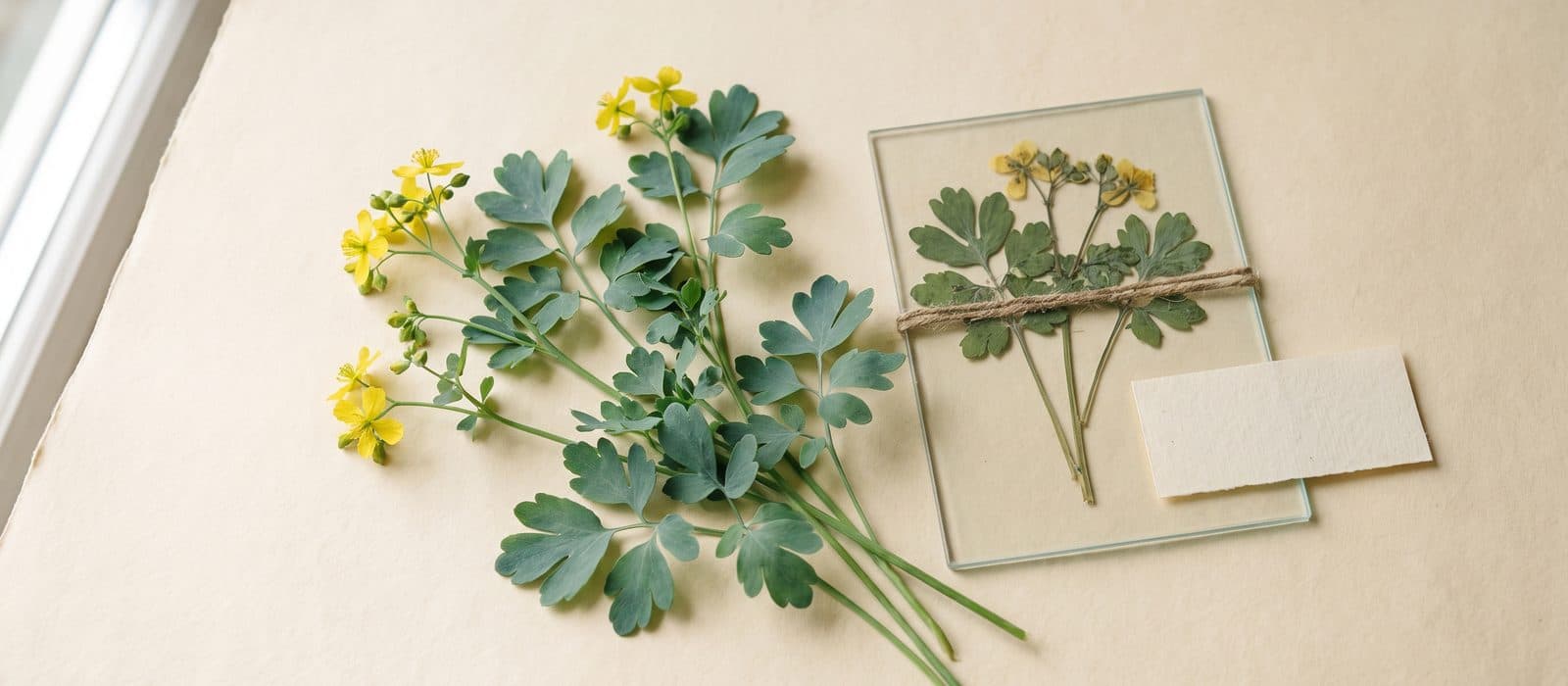
Homeopathic Ruta is prepared from the fresh herb of Ruta graveolens, garden rue, a small woody subshrub native to the Mediterranean and long grown in European herb gardens. It belongs to the Rutaceae, the citrus family, and the resemblance shows in its scent: crushed rue leaves smell sharp, bitter and faintly of orange peel. The leaves are blue-green and divided into rounded lobes, and the small flowers are a clear mustard yellow. Graveolens means strong-smelling.
The herb is steeped in alcohol to make a mother tincture, then diluted and succussed step by step to the potency on the label. Our potencies guide explains what that process leaves in the vial and why mainstream science is sceptical of it.
Rue is not a harmless garden herb. Its sap contains furanocoumarins that make skin react to sunlight, and brushing against the plant on a bright day can leave blistering burns some hours later. It was also historically used, in large amounts, to try to end pregnancies, a practice that caused serious poisoning. None of that applies to a potentised preparation at common potencies, but it is the reason rue has stayed out of the kitchen and why herbal rue products carry warnings.
What is the Ruta picture?
The Ruta picture is a part that has been asked to do too much. A runner's shins ache along the bone after a run on hard ground. A wrist aches at the tendons after a week of typing. A knee aches at the attachment below the kneecap after a long descent. The pain is bruised and lame, as if the part had been knocked, though often nothing struck it; the sensation is of tissue worn out at the point where it anchors to bone.
Boericke (1927) opens his entry by placing Ruta in the periosteum and cartilages, with a bruised, lame feeling all over, as after a fall or blow. He singles out the flexor tendons and the places where bone is close to the skin. Classic texts also describe a restlessness that is less about anxiety than discomfort: the person shifts and turns because no position stays comfortable for long, and lying on the sore part is worse.
The second strand is the eyes. After hours of fine work, reading small print or sewing in poor light, the eyes feel hot, aching and strained, as if they had been overworked, and a headache can follow. The old materia medica wrote this for seamstresses and engravers; the modern version is the screen.
What makes it better or worse?
The traditional modalities centre on lying down, cold and overuse. Ruta is worse from lying on the sore part and from cold, damp weather, and better from warmth.
| Modality | Worse | Better |
|---|---|---|
| Position | Lying down, especially on the painful side | Changing position; some texts note better moving about |
| Temperature | Cold, wet weather; cold air | Warmth |
| Use | Overuse, repetitive strain, stooping | Rest from the repeated task |
| Eyes | Reading, fine work, straining to see | Resting the eyes |
| Time | No consistent keynote | No consistent keynote |
Modalities are how a homeopath separates one aching tendon from another; our guide to modalities, better and worse explains why they matter as much as the location.
What is Ruta traditionally discussed for?
In homeopathic literature, Ruta is traditionally discussed for strain and overuse in tendons, ligaments and bone surfaces, and for tired eyes after close work. Each of these appears on one of our acute pages, where the Ruta-like pattern sits beside its neighbours and the red flags come first.
Tendons and repetitive strain
- Aching wrist tendons after long keyboard work: wrist pain from typing.
- Tendon overuse on the outside of the elbow: tennis elbow soreness.
- The attachment below the kneecap after a long downhill: knee soreness after a hike.
- Where the sole's tissues anchor to the heel: heel pain after standing.
Bone surfaces
- The bruised ache along the shin bone: shin splints from running.
Ligaments
- The ligament-and-tendon element of a turned ankle: a sprained ankle. Our guide to sprains, strains and overuse reads the whole injury before any remedy name.
Eyes
- Hot, overworked eyes followed by a headache: a headache from eye strain.
What is Ruta not?
Ruta is not "the sprain remedy", and it is not a second Arnica. The commonest misreading is to read the two as interchangeable injury names. Arnica's picture is the general, bruised, beaten state after trauma; Ruta's is narrower and later, the lame ache in the attaching tissues after overuse. It is also not a reason to keep going on a joint that cannot bear weight, has changed shape, or has lost feeling, and eye strain with a sudden change in vision, flashing lights or a painful red eye needs an eye examination.
Homeopaths separate Ruta from its neighbours like this:
| Picture | Where it sits | Defining feature | Key modality |
|---|---|---|---|
| Ruta graveolens | Tendons, ligaments, bone surfaces, strained eyes | Bruised, lame ache from overuse at attachments | Worse lying on it, worse cold and damp |
| Arnica montana | General soreness after a blow, fall or exertion | Beaten all over; "I'm fine"; bed feels too hard | Worse touch and jarring |
| Rhus toxicodendron | Joints and muscles after strain | Stiff on first moving, loosens with continued motion | Better continued motion and warmth |
| Symphytum | Bone itself and the eyeball after a blow | Pricking pain in bone after injury | Worse touch and pressure on the bone |
| Bryonia | Joints and serous tissues | Stitching pain from the slightest movement | Worse any motion; better keeping perfectly still |
What potencies is Ruta sold in?
Ruta graveolens is sold most often as 30C pellets, the common shelf potency for single remedies, with 6C and 200C also widely available, and it appears in many sports and injury kits. Potency describes the preparation process, not an amount of herb: 30C means thirty successive 1:100 dilutions with succussion between them. Our potencies guide explains the scale and what remains in the vial.
This page deliberately gives no frequency or instructions for taking Ruta. That depends on a whole case, not a remedy name. Read the product label, and talk to a qualified practitioner about an individual situation.
What remedy lists don't tell you
Two things the injury lists leave out:
- Ruta is a timing picture as much as a place. In the tradition, the fresh, general bruising of the first hours belongs to Arnica's description; Ruta's picture is what remains once the general soreness settles and the ache concentrates where a tendon or ligament attaches. Lists that put the two side by side under "sprains" lose the sequence that homeopaths actually read.
- The eye strand has nothing to do with injury. Ruta turns up in kits as a sports remedy, yet one of its oldest and most specific descriptions is tired, hot eyes after fine close work. It is a reminder that a remedy name tracks a kind of tissue and a kind of strain, not a category of accident, which is the idea our guide to reading Latin remedy names is built around.
Where the Ruta graveolens picture appears on this site
Acute pages that discuss this picture among their educational patterns, with the pattern name each page uses.
- What homeopathic remedy for a headache from eye strain?Ruta graveolens-like eye-overuse headache pattern
- What homeopathic remedy for a sprained ankle?Ruta-like tendon or ligament strain pattern
- What homeopathic remedy for heel pain after standing all day?Ruta graveolens-like attachment-strain pattern
- What homeopathic remedy for knee soreness after a hike?Ruta graveolens-like kneecap-tendon strain pattern
- What homeopathic remedy for shin splints from running?Ruta graveolens-like periosteal bruise pattern
- What homeopathic remedy for soreness on the outside of the elbow?Ruta graveolens-like tendon overuse pattern
- What homeopathic remedy for wrist pain from typing?Ruta graveolens-like tendon overuse pattern
Not sure whether a picture fits?
A remedy profile describes a picture; it cannot tell you whether that picture matches what you are seeing. An acute consultation starts from the case itself: onset, sensations, what changes it, and the red flags.
Acute consultation · $45Frequently asked questions
- What is Ruta graveolens?
- Ruta graveolens is a homeopathic remedy prepared from rue, a blue-green, strong-smelling Mediterranean herb. In homeopathy it names a traditional picture: a bruised, lame, weary ache in tendons, ligaments and the surface of bones after overuse or a knock, and aching, hot eyes after close work. It is a description homeopaths use to compare cases, not a finding that it works for any injury.
- What is Ruta graveolens used for in homeopathy?
- Homeopathic literature traditionally discusses Ruta for strain and overuse where the tissues that attach and hold are involved: tendons, ligaments, the bone surface just under the skin, and the eyes after long close work. The picture is the bruised, lame feeling in those structures and its modalities, not the name of an injury. Deformity, inability to bear weight, numbness or a sudden change in vision need medical assessment first.
- What is Ruta 30C used for?
- 30C is the common shelf potency for Ruta graveolens, the one most single-remedy tubes and home kits carry. In the tradition, the potency does not change the picture the remedy belongs to; Ruta 30C is discussed for the same tendon, bone-surface and eye-strain picture as any other potency. What 30C means as a dilution is explained in our potencies guide.
- How is Ruta graveolens taken?
- This page does not give instructions on how or how often to take any remedy, because that depends on a whole case rather than on a remedy name. The product label carries the manufacturer's directions, and a qualified practitioner can advise on an individual situation. An injury that is severe, deformed or getting worse needs medical care first.
- Where can I buy Ruta graveolens?
- Pharmacies, health-food shops and homeopathic manufacturers sell Ruta graveolens as single-remedy pellets, most often in 30C, and it appears in many sports and injury kits. This site also prepares custom single remedies to order: you name the remedy and potency, and the details are confirmed by email before anything is made. The order form does not give advice on which remedy to choose.
- What is Ruta graveolens made from?
- Homeopathic Ruta is prepared from the fresh herb of garden rue, Ruta graveolens, a woody Mediterranean plant in the citrus family. The herb is steeped to make a mother tincture, which is diluted and succussed to the labelled potency. Fresh rue sap can blister skin in sunlight, and the plant was historically misused in large amounts with dangerous results, which is why rue itself is not a kitchen herb.
This guide is educational only and is not medical advice or a personalized remedy recommendation. Acute symptoms can become urgent; when in doubt, seek professional evaluation.